US approves $825 million sale of Stinger Block I missiles to Morocco
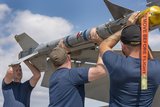
The FIM-92K Stinger missile has been sold to more than 18 nations. (Photo: US Marine Corps/Cpl. Joshua Brittenham)
The 600-missiles will be used to expand the Moroccan armed forces’ short range air defence capabilities.


The US has approved a possible US$825 million sale of up to 600 FIM-92K Stinger Block I missiles to Morocco.
The missiles will also be accompanied by technical, logistics and programme support, according to the US State Department.
The FIM-92 Stinger is a passive-guided MANPADS, first developed to meet the requirements of the US Army to defend against low-flying threats.
In a notice, the Defence Security Cooperation Aency (DSCA) said that Morocco intends to use the missiles to “modernise its armed forces and expand its existing army short range air defence options”.
“This will contribute to the Moroccan Army’s goals
Our news & analysis is now part of Defence Insight®
A Basic-level or higher Defence Insight subscription is now required to view this content.



More from Land Warfare
-
![British Army Land Rover replacement plan inches forward]()
British Army Land Rover replacement plan inches forward
The UK Ministry of Defence has proposed a selection date of May 2027 for the Land Rover replacement requirement, with deliveries expected through to 2036. Next month’s DVD exhibition will be a key shop window for bidders.
-
![Snow patrol and access all areas: the Arctic all-terrain vehicles market grows]()
Snow patrol and access all areas: the Arctic all-terrain vehicles market grows
The procurement and planned procurement of articulated tracked all-terrain vehicles is being driven by a need to replace older platforms and an acknowledgement of a capability gap for Arctic regions.
-
![Push strengthens for a second JLTV supplier]()
Push strengthens for a second JLTV supplier
A move, launched in May, could lead to a second supplier for the US Marines Corps’ Joint Light Tactical Vehicle requirement. Meanwhile, Wisconsin elected representatives have been pushing for necessary funding to be included in the FY27 budget.
-
![July land forces roundup: UK outlines spending with details unveiled on Eurosatory vehicles]()
July land forces roundup: UK outlines spending with details unveiled on Eurosatory vehicles
Analysis of the long-awaited UK Defence Investment Plan, which was finally released on 30 June, revealed scant investment in platform replacement for the British Army. The bright spot in July, however, was a multibillion-dollar contract awarded for the British Army’s Collective Training System.