


Ukraine to receive more Zuzana 2s with trilateral funding
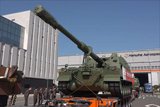
Sixteen more Zuzana 2 wheeled self-propelled howitzers will be provided to Ukraine. (Photo: Konstrukta)
Slovakia will produce 16 Zuzana 2 SPHs for Ukraine, with funding from the Danish, German and Norwegian governments.


Ukrainian defence minister Oleksii Reznikov announced on 2 October that Denmark has agreed a new military aid package, including a trilateral agreement with Norway and Germany to fund the production of Zuzana 2 155mm wheeled self-propelled howitzers (SPHs).
Denmark agreed to provide another package of defence aid worth €145 million ($141.7 million), bringing the total value of its military assistance to Ukraine to €530 million since 24 February.
Working alongside the German and Norwegian governments, Denmark also agreed to finance the production in Slovakia of 16 Zuzana 2 SPHs for Ukraine.
The value of this arrangement was undisclosed but Shephard Defence Insight gives a unit price of $6.45 million for Zuzana 2, which would translate to $103.2 million for 16 of the SPHs.
Slovakia previously provided eight Zuzana 2s to help Ukraine’s ongoing resistance against the Russian invasion.
Related Equipment in Defence Insight


More from Land Warfare
-
![Clearer military requirements could unlock UGV market growth]()
Clearer military requirements could unlock UGV market growth
Western armies continue to test uncrewed ground vehicles, but wider procurement will depend on turning ambitions for autonomy into defined operational roles and funded requirements.
-
![Can NATO’s CUAS marketplace turn urgent demand into deliveries?]()
Can NATO’s CUAS marketplace turn urgent demand into deliveries?
Framework contracts and leasing options aim to shorten acquisition timelines, while manufacturing partnerships could help suppliers scale production to meet allied demand.
-
![A medium UGV market emerges as the US weighs up its options]()
A medium UGV market emerges as the US weighs up its options
The US is pursuing multiple UGV programmes, from commercial robotic platforms to new autonomy technologies. The combination of these efforts could prove key to turning ambition into operational capability.
-
![NATO looks for answers to overcome standards hurdles and improve procurement]()
NATO looks for answers to overcome standards hurdles and improve procurement
NATO is looking to artificial intelligence to provide integration between different C2 systems to create a common operational picture, potentially offering a faster route to interoperability than the slow-moving processes of NATO standards committees.
-
![NATO FUSE exercise plays out real-world scenario in the face of eastern border risks]()
NATO FUSE exercise plays out real-world scenario in the face of eastern border risks
The large-scale exercise in Latvia was the culmination of three experimentation initiatives to see how platforms, weapons and systems could fit into the alliance’s Eastern Flank Deterrence Initiative. As well as forces, it brought together companies and equipment.





