Rheinmetall begins Lynx armoured vehicle production in Hungary
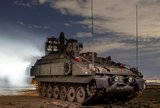
In addition to the IFV variant, the Zalaegerszeg production line in Hungary will also build Lynx combat support vehicles. (Photo: Rheinmetall)
Low-rate production of Lynx infantry fighting vehicles (IFVs) has commenced in Hungary with initial deliveries from this source due in 2024.


Rheinmetall has announced that low-rate initial production (LRIP)of its Lynx IFV has begun in Hungary, the vehicle’s first customer nation.
Pre-seriesproduction activity also encompasses fabrication ofthe Lance medium-calibre turret as well as additional variants of the Lynx.Full-rate production is due to commence in July this year.
In the firstcontract phase, Hungary will take delivery of 46 Lynx IFV and C2 variants plus nine Büffel armoured recoveryvehicles from production lines in Germany. The first of these was handed over to the customer in October 2022.
Related Articles
Rheinmetall awards Lynx IFV-related contracts to Slovak industry
Hungary seeks supply chain independence with new ordnance plant
Will British Army Boxer IFVs feature the Patria Nemo mortar system?
In the second phase, 172 Lynx IFVs and combat support vehicles will be manufactured in Hungary at the new factory site in Zalaegerszeg. In addition to armouredfighting vehicles, contract includes ammunition and logistics services as well as 16 trucks.
Related Programmes in Defence Insight
Related Equipment in Defence Insight




More from Land Warfare
-
![Europe commits to long-range fires but countries move in different directions]()
Europe commits to long-range fires but countries move in different directions
Sweden, Croatia and France are pursuing different rocket artillery solutions as European armies seek greater reach, survivability and industrial resilience.
-
![Polaris expands Arctic mobility offering as US military orders grow]()
Polaris expands Arctic mobility offering as US military orders grow
The Military 850 Voyageur 155 Crossover has secured orders from the US Army, Air Force and Marine Corps, addressing demand for agile Arctic mobility with passenger, cargo and towing capacity.
-
![Northrop Grumman pushing ahead with smaller Integrated Battle Command System]()
Northrop Grumman pushing ahead with smaller Integrated Battle Command System
Northrop Grumman’s Integrated Battle Command System is in service with Polish forces and is being introduced to US forces, with further development underway on the original platform as well as a smaller, more mobile system.
-
![UK’s ground-based air defence effort remains in assessment phase after third industry day]()
UK’s ground-based air defence effort remains in assessment phase after third industry day
The UK’s plan to introduce a new air defence capability into the British Army will cover short and medium-range defence as well as counter-uncrewed aerial system systems. Timelines are not yet laid out but industry is making plans.