K9 rolls on as Egypt unveils systems, Australia fires and Vietnam and Norway place orders
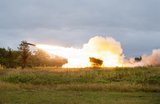
The Australian Army fired its new AS9 Huntsman SPH on home soil for the first time on 1 December. (Photo: Australian Department of Defence)
Hanwha Aerospace’s tracked K9 Thunder 155mm/52-calibre self-propelled howitzer has had notable success in the market over the past few years in Europe and Asia, with Poland alone ordering 316 systems.


Hanwha Aerospace has chalked up major milestones in deliveries of its K9 self-propelled howitzer (SPH) in the past few days, with Australian soldiers conducting first firings on home soil and Egypt demonstrating that its K9s are in service.
This follows hot on the heels of Norway ordering more systems in September and Vietnam placing an order in July, the latter meaning more than 1,300 of the systems have been ordered by 11 countries. Other countries which have placed contracts are India, Romania, Poland, Finland, Turkey, Estonia and South Korea.
Known in Australian service as the AS9 Huntsman, the country’s army is to
Our news & analysis is now part of Defence Insight®
A Basic-level or higher Defence Insight subscription is now required to view this content.


More from Land Warfare
-
![AUSA 2026: industry looks to make commercial platforms a military reality]()
AUSA 2026: industry looks to make commercial platforms a military reality
With a production rate of more than 10 million vehicles annually, the US commercial car and vehicle manufacturing base is second only to China. Defence companies are looking at how the vehicles, technology and manufacturing capability can support programmes.
-
![With changing patterns in Middle Eastern procurement, is Europe missing out?]()
With changing patterns in Middle Eastern procurement, is Europe missing out?
Traditional suppliers are struggling to meet the Middle East’s armoured vehicle modernisation needs, creating opportunities for South Korean manufacturers and regional defence industries.
-
![AUSA 2026: CUAS market expands as suppliers target new threats and operational requirements]()
AUSA 2026: CUAS market expands as suppliers target new threats and operational requirements
New developments from MARSS, MyDefence, Mountain Horse Solutions and Rafael suggest that future counter-drone protection will increasingly depend on combining advanced detection, rapid interception and integrated defensive networks.
-
![Integrated approach: transforming vehicle communications for a new era of warfare]()
Integrated approach: transforming vehicle communications for a new era of warfare
In the modern battlespace, military intercom systems can no longer operate in isolation. They must instead be integrated with the wider tactical network, gaining operational advantages through secure communications with dismounted soliders and other assets across domains.