South Korea completes K9 deliveries
The South Korean military has received its final units of the K9 Thunder 155mm self-propelled howitzer.


The Republic of Korea Army (ROKA) has received the last of its K9 Thunder 155mm L/52 tracked SPHs from Hanwha Defense, the governmental Defense Acquisition Program Administration (DAPA) announced on 13 November.
No production figure has been disclosed for the South Korean military, but Shephard’s Defence Insight lists 1,178 vehicles as having been delivered. However, of these, 67 surplus vehicles were on-sold to other customers.
Samsung Techwin delivered the first K9 to the ROKA in 1999, the SPH’s first deployment being on the western border islands of Yeonpyeong and Baengnyeong. The ROK Marine Corps (ROKMC) also received the weapon
Our news & analysis is now part of Defence Insight®
A Basic-level or higher Defence Insight subscription is now required to view this content.
More from Land Warfare
-
![AUSA 2026: XM30 competitors keep their cards close as US Army decision approaches]()
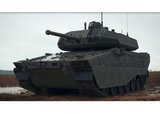
AUSA 2026: XM30 competitors keep their cards close as US Army decision approaches
The US Army’s XM30 programme is an ambitious multi-billion-dollar effort to replace Bradley infantry fighting vehicles. American Rheinmetall and General Dynamics Land Systems are fighting for the contract.
-
![AUSA 2026: AM General boss confirms 300-plus JLTV A2s delivered as export orders approach]()
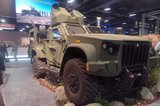
AUSA 2026: AM General boss confirms 300-plus JLTV A2s delivered as export orders approach
The Joint Light Tactical Vehicle programme for the US Marine Corps appears to be making progress, with AM General increasing production of its version while Oshkosh Defense has secured long-lead materials in anticipation of becoming a second supplier.
-
![AUSA 2026: Bale Defence adds CUAS role to RTV6 platform]()
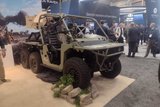
AUSA 2026: Bale Defence adds CUAS role to RTV6 platform
An elevated remote weapon station, radar sensor and 12.7mm machine gun provide the Australian vehicle with a potential mobile counter-drone capability.