


New uses for proven weapons: adapting the Chain Gun for CUAS
Northrop Grumman’s M230LF Chain Gun is finding a growing role in countering uncrewed aerial systems, with the 30mm weapon already deployed to Ukraine and adopted by US forces.


The Philippine Department of Defense (DND) continues to seek new equipment to fill capability gaps in terms of small arms and crew-served weapons for both the Philippine Army and the Philippine Marine Corps (PMC).
Addressing current PMC requirements first, the DND has launched a PHP514.8 million ($10.1 million) project to obtain 702 rocket-propelled grenade (RPG) launchers plus 22,000 rounds.
These 40mm RPGs will replace old M67 90mm recoilless rifles in marine infantry squads. The PMC is also seeking 40 trainer RPG launchers plus 21,061 tracer practice rounds for training.
Elite units within the Philippine Navy and PMC are already operating
Our news & analysis is now part of Defence Insight®
A Basic-level or higher Defence Insight subscription is now required to view this content.

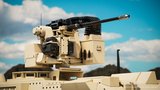
Northrop Grumman’s M230LF Chain Gun is finding a growing role in countering uncrewed aerial systems, with the 30mm weapon already deployed to Ukraine and adopted by US forces.
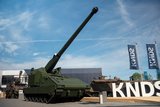
KNDS Deutschland has fitted a tracked RCH 155 with a new KNDS France 155mm/58cal ordnance, opening a potential path towards significantly longer-range artillery and a future beyond the current NATO standard.

It is believed that three companies did not make the downselect but a dark horse in Spain’s Iturri is believed to have got through.
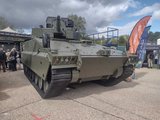
Air defence and counter-drone weapons continue to be developed, tested and demonstrated in anticipation of growing demand, with most solutions designed to be platform-agnostic and readily integrated onto suitable platforms.
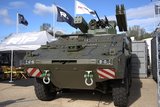
The US Army began its search for a 155mm tracked mobile tactical cannon in an effort that Shephard forecasts could be worth billions of dollars. Meanwhile, the UK DVD exhibition saw companies showcase their offerings for the British Army’s mobility and air defence requirements.
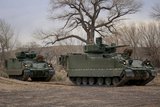
The development demonstrates how the platform could provide additional firepower and growth potential while the US Army progresses its long-term replacement for the Bradley.

Connect with us on socials


