Persisent Systems to roll out regional network for US Air Force bases
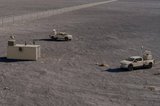
Malmstrom AFB is one of three sites to receive IRON networking capability. (Photo: USAF)
Persistent Systems will deliver Infrastructure-based Regional Operation Network (IRON) functionality across three major USAF missile bases to improve situation awareness for security forces.


Persistent Systems has been awarded a $75.5 million contract by the USAF supporting Air Force Global Strike Command (AFGSC) in rolling out the company’s Infrastructure-based Regional Operation Network (IRON) across three air bases as part of the Regional Operating Picture (ROP) programme.
Persistent’s Wave Relay network will enable airmen equipped with MANET devices to share voice, video, chat, sensor, and GPS data. IRON will extend this network over a 25,000-square-mile area, connecting edge networks into a unified Battlespace Awareness Network.
ROP utilises IRON antennas on fixed towers and poles to connect 75 operation centres and over 1,000 security force vehicles.
Related Articles
Persistent Systems shows early developmental model version of new display
Why China’s surveillance balloon is more intriguing than alarming
‘The first step will be to roll out ROP across Malmstrom, Minot, and FE Warren Air Force Bases with eventually more to come,’ said Adrien Robenhymer, Persistent’s VP of business development.
IRON is also used with networked weapons, base defences, distribution of over-the-horizon communications for airborne counterinsurgency, and to support the USAF Agile Combat Employment (ACE) concept for dealing with near-peer powers targeting large air bases.
The ROP programme has already commenced deploying IRON systems across the missile fields and work will continue over the next three years.

You may also like
More from Land Warfare
-
![Front-line support: how UK industry is helping tackle Ukraine’s landmine challenges]()
Front-line support: how UK industry is helping tackle Ukraine’s landmine challenges
Pearson Engineering has provided equipment and engineering expertise to the Armed Forces of Ukraine since the beginning of the full-scale Russian invasion in 2022. The British company is now working to deepen engagement with the Ukrainian defence industry, expanding its support for the country’s population and laying the foundations for future technological innovation.
-
![AUSA 2026: companies adapt munitions and missiles for greater effect at lower costs]()
AUSA 2026: companies adapt munitions and missiles for greater effect at lower costs
Rather than developing entirely new weapons, defence companies are looking to build on existing weapons and systems to deliver greater capability, control costs and accelerate fielding.
-
![AUSA 2026: industry looks to make commercial platforms a military reality]()
AUSA 2026: industry looks to make commercial platforms a military reality
With a production rate of more than 10 million vehicles annually, the US commercial car and vehicle manufacturing base is second only to China. Defence companies are looking at how the vehicles, technology and manufacturing capability can support programmes.
-
![With changing patterns in Middle Eastern procurement, is Europe missing out?]()
With changing patterns in Middle Eastern procurement, is Europe missing out?
Traditional suppliers are struggling to meet the Middle East’s armoured vehicle modernisation needs, creating opportunities for South Korean manufacturers and regional defence industries.
-
![AUSA 2026: CUAS market expands as suppliers target new threats and operational requirements]()
AUSA 2026: CUAS market expands as suppliers target new threats and operational requirements
New developments from MARSS, MyDefence, Mountain Horse Solutions and Rafael suggest that future counter-drone protection will increasingly depend on combining advanced detection, rapid interception and integrated defensive networks.
-
![US Army seeks CAML-Lite autonomous launcher prototypes for 2027 live-fire trials]()
US Army seeks CAML-Lite autonomous launcher prototypes for 2027 live-fire trials
The optionally crewed, C-130-transportable platforms would combine modular offensive and defensive fires with autonomous resupply, with demonstrations planned for Talisman Sabre 2027.