Patria extends life of Finnish Army armoured vehicles to maintain key capability
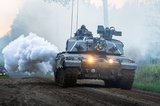
Finland's XA-series 6x6 APCs will remain in service into the 2040s after undergoing an upgrade programme. (Photo: Patria)
Patria has completed an upgrade programme for the Finnish Army’s XA-180 6x6 APC fleet, extending its service life into the 2040s.


Patria has completed the Mid-Life-Upgrade (MLU) project for the Finnish Army’s XA-180 armoured personnel carrier fleet as the last vehicles have now been delivered back to the service.
The MLU agreement was signed by Patria and the Finnish Defence Forces in 2013.
Patria Finland Division’s army business area leader Tommi Svensk said: ‘The XA-series, also known as “Pasi” vehicles, modernisation project has been an important project for Patria and the life cycle of the vehicles has been secured until the 2040s. By then, the mobility role of XA-180 vehicles is meant to be replaced by the new Patria 6x6 vehicles.
‘Patria appreciates the flexible cooperation with the Finnish Defence Forces and numerous other cooperation partners,’
Modifications implemented under the MLU include new electrical systems and communications equipment, as well as an updated crew space with improved seating. Key components, such as engines, transmission and axles, were inspected and repaired, or replaced if necessary.
Shephard Defence Insight lists Finland as having 640 XA-series vehicles in service and an undisclosed number have been donated to Ukraine.
Finland is expected to sign a contract next year for 160 Patria 6x6 Common Armoured Vehicle System (CAVS) platforms. This will cover APC and other specialist variants.
Related Programmes in Defence Insight
Patria 6x6 (Batch 1) [Finland]
Related Equipment in Defence Insight


More from Land Warfare
-
![Europe commits to long-range fires but countries move in different directions]()
Europe commits to long-range fires but countries move in different directions
Sweden, Croatia and France are pursuing different rocket artillery solutions as European armies seek greater reach, survivability and industrial resilience.
-
![MAAF to test Britain’s shift from armour to distributed lethality in Estonia]()
MAAF to test Britain’s shift from armour to distributed lethality in Estonia
The bilateral agreement between the UK and Estonia comes as both countries explore how dispersed troops, drones, digital targeting, anti-tank weapons and increasingly long-range fires can complement the combat mass traditionally provided by heavy armour.
-
![Polaris expands Arctic mobility offering as US military orders grow]()
Polaris expands Arctic mobility offering as US military orders grow
The Military 850 Voyageur 155 Crossover has secured orders from the US Army, Air Force and Marine Corps, addressing demand for agile Arctic mobility with passenger, cargo and towing capacity.