Norway selects Korean K9, boosting Euro prospects further


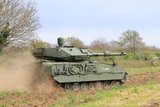
South Korean company Hanwha Techwin has notched up yet another order for its K9 Thunder self-propelled howitzer (SPH) in Europe, with Norway announcing its intention to purchase the weapon system.
The Norwegian Defence Materiel Agency announced on 20 December that it had signed a contract for 24 of the 155mm/52cal systems, with an option for an additional 24. The contract value is worth 1.8 billion kr ($215 million).
A technical centre will also be established with Hanwha Techwin providing test equipment, training materials and technical knowledge.
The 24 K9 Thunders significantly bolster the Norwegian armed force’s tracked SPH capability, which
Our news & analysis is now part of Defence Insight®
A Basic-level or higher Defence Insight subscription is now required to view this content.

More from Land Warfare
-
![Companies downselected for British Army vehicle programme]()
Companies downselected for British Army vehicle programme
It is believed that three companies did not make the downselect but a dark horse in Spain’s Iturri is believed to have got through.
-
![Air defence offerings multiply in anticipation of emerging requirements]()
Air defence offerings multiply in anticipation of emerging requirements
Air defence and counter-drone weapons continue to be developed, tested and demonstrated in anticipation of growing demand, with most solutions designed to be platform-agnostic and readily integrated onto suitable platforms.
-
![September land forces roundup: DVD 2026 puts British Army requirements in the spotlight]()
September land forces roundup: DVD 2026 puts British Army requirements in the spotlight
The US Army began its search for a 155mm tracked mobile tactical cannon in an effort that Shephard forecasts could be worth billions of dollars. Meanwhile, the UK DVD exhibition saw companies showcase their offerings for the British Army’s mobility and air defence requirements.
-
![FNSS advances Indonesian Kaplan APC programme as local production expands]()
FNSS advances Indonesian Kaplan APC programme as local production expands
FNSS and PT Pindad are progressing the Indonesian tracked armoured personnel carrier programme as local production gets under way.