Finding the balance between armour and air defence as UAVs proliferate
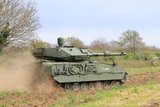
Estonia cancelled its procurement of additional CV90s in April 2026 and is expected to instead upgrade its existing platforms. (Photo: Estonian MoD)
While the growing drone threat has sharpened the focus on air defence solutions, Dr Peter Magill looks at why protected mobility remains crucial.


Estonia’s recent decision to cancel the procurement of new CV90s in favour of new air defence systems highlights a debate at the heart of defence procurement.
Since the full-scale Russian invasion of Ukraine, there has been a recurring narrative that traditional armoured platforms are obsolete. This line of thought has argued that armoured vehicles are slow, expensive and can be easily destroyed by first-person view (FPV) uncrewed aerial vehicles (UAVs).
The recent US-Iran war has reinforced the need for a variety of air defence systems to counter the proliferation of UAVs and loitering munitions.
This, however, ignores the importance of
Our news & analysis is now part of Defence Insight®
A Basic-level or higher Defence Insight subscription is now required to view this content.


More from Land Warfare
-
![Tulpar firing trials expand Hitfact Mk II platform options]()
Tulpar firing trials expand Hitfact Mk II platform options
Firing trials of the Tulpar and Leonardo Hitfact Mk II combination follow an integration programme covering mechanical, electrical, electronic and software interfaces.
-
![How to breach a minefield: from traditional systems to modern techniques in action]()
How to breach a minefield: from traditional systems to modern techniques in action
The news from Ukraine has again shown that antitank minefields and other obstacles on the battlefield, such as deep trenches, can play a key role in both offensive and defensive operations. Given this, there will always be a need to clear them, both during and after a conflict.
-
![British Army's open plan draws diverse offerings for Land Rover replacement]()
British Army's open plan draws diverse offerings for Land Rover replacement
The UK Ministry of Defence has avoided being prescriptive in its search to replace the British Army’s Land Rover, meaning vehicle types being offered range from Land Rover Defender Wolf II and Humvee to the hybrid series Fering Pioneer. What does this mean for the procurement process?
-
![DVD 2026: British Army’s Ajax back in the hands of users as part of a gradual return]()
DVD 2026: British Army’s Ajax back in the hands of users as part of a gradual return
The introduction of Ajax vehicles into British Army service was stopped after operator health issues were reported during an exercise, but manufacturer General Dynamics Land Systems UK believes work over the past 10 months has dealt with the problems.