Northrop Grumman missile interceptor passes test
Northrop Grumman and Raytheon have teamed up to bid for the Next Generation Interceptor requirement. (Image: Northrop Grumman)
Lockheed Martin and Northrop Grumman-Raytheon have been competing for the Next Generation Interceptor programme to defend the US from Intercontinental Ballistic Missile threats.


Northrop Grumman and its partner company Raytheon have successfully completed the All-Up Round (AUR) Preliminary Design Review (PDR) of its Next Generation Interceptor (NGI) offering, part of the Ground-Based Midcourse Defense system, in partnership with the US DoD Missile Defense Agency (MDA).
A key requirement of this PDR has been demonstrating that the design would maintain full capability while surviving challenging environments, as well as establishing the approach for the full integration of the interceptor design across all its subsystems before moving into more advanced phases of development.
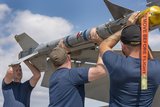
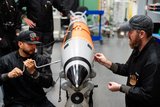
The Northrop Grumman team provided on-site interactive demonstrators for review by MDA, including a full-scale solid rocket motor, avionics and other test hardware.
Raytheon provided kill vehicle hardware used during environmental testing, sensor hardware, kill vehicle hardware that supports manufacturing fixtures and test equipment. There was also a full-scale digital model of the AUR design in a virtual reality environment as part of the PDR.
Following the successful completion of PDR, Northrop Grumman will continue maturing its NGI design on the path to its Critical Design Review. The first operational NGI has been forecast to be deployed as early as 2027.
Lockheed Martin’s NGI programme executed its digital AUR PDR review on September 29 last year.


More from Land Warfare
-
![British Army Land Rover replacement plan inches forward]()
British Army Land Rover replacement plan inches forward
The UK Ministry of Defence has proposed a selection date of May 2027 for the Land Rover replacement requirement, with deliveries expected through to 2036. Next month’s DVD exhibition will be a key shop window for bidders.
-
![Snow patrol and access all areas: the Arctic all-terrain vehicles market grows]()
Snow patrol and access all areas: the Arctic all-terrain vehicles market grows
The procurement and planned procurement of articulated tracked all-terrain vehicles is being driven by a need to replace older platforms and an acknowledgement of a capability gap for Arctic regions.
-
![Push strengthens for a second JLTV supplier]()
Push strengthens for a second JLTV supplier
A move, launched in May, could lead to a second supplier for the US Marines Corps’ Joint Light Tactical Vehicle requirement. Meanwhile, Wisconsin elected representatives have been pushing for necessary funding to be included in the FY27 budget.
-
![July land forces roundup: UK outlines spending with details unveiled on Eurosatory vehicles]()
July land forces roundup: UK outlines spending with details unveiled on Eurosatory vehicles
Analysis of the long-awaited UK Defence Investment Plan, which was finally released on 30 June, revealed scant investment in platform replacement for the British Army. The bright spot in July, however, was a multibillion-dollar contract awarded for the British Army’s Collective Training System.