MilDef to supply customised switches for BvS10 under $7.3 million deal
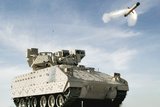
The BvS10 is in service with Sweden, Austria, France, the Netherlands, the UK and the US. (Photo: BAE Systems)
More than 1,000 BvS10 all-terrain armoured vehicles have been ordered and more than 500 delivered. The platform is focused on extreme cold weather operations and is being delivered to meet the US Army’s Cold Weather All-Terrain Vehicle (CATV) requirement.


MilDef will supply rugged IT equipment, specifically customised switches, for newly manufactured BvS10 All-Terrain Vehicles (ATVs) under a SEK80 million (US$7.3 million) contract signed with BAE Systems Hägglunds.
The European country receiving the vehicles has not been disclosed but deliveries are ongoing to the UK, Sweden, Germany and Austria. Deliveries of the systems from MilDef are expected to be completed before the end of the decade.
The BvS10 has begun to catch the eye of countries looking to create capability in Arctic or northern European regions, but also proved its versatility in UK operations in Afghanistan where lessons learned were transferred to improved versions.
It is an articulated vehicle and is equipped with Soucy’s Composite Rubber Tracks (CRTs) as standard.
Various modular subsystems such as add-on armour, weapon mounts, load changer and cargo pods provide flexibility to meet customer requirements.
A breakthrough win for the platform was in August 2022 when the US Army announced the award of a US$278 million agreement for the supply of the BvS10s for the CATV programme.
It will replace the ageing fleet of Small Unit Support Vehicles (SUSVs) and the first platform was announced as delivered from the Swedish factory in October 2023.
Related Programmes in Defence Insight
Related Equipment in Defence Insight

More from Land Warfare
-
![AUSA 2026: companies adapt munitions and missiles for greater effect at lower costs]()
AUSA 2026: companies adapt munitions and missiles for greater effect at lower costs
Rather than developing entirely new weapons, defence companies are looking to build on existing weapons and systems to deliver greater capability, control costs and accelerate fielding.
-
![AUSA 2026: CUAS market expands as suppliers target new threats and operational requirements]()
AUSA 2026: CUAS market expands as suppliers target new threats and operational requirements
New developments from MARSS, MyDefence, Mountain Horse Solutions and Rafael suggest that future counter-drone protection will increasingly depend on combining advanced detection, rapid interception and integrated defensive networks.
-
![US Army seeks CAML-Lite autonomous launcher prototypes for 2027 live-fire trials]()
US Army seeks CAML-Lite autonomous launcher prototypes for 2027 live-fire trials
The optionally crewed, C-130-transportable platforms would combine modular offensive and defensive fires with autonomous resupply, with demonstrations planned for Talisman Sabre 2027.