MilDef signs 20-year framework agreement with NATO country
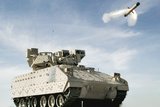
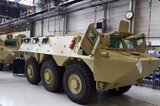
An undisclosed NATO country is acquiring computers, displays and network infrastructure for C2. (Photo: MilDef)
The SEK2.8 billion ($261 million) deal to support an armoured vehicle programme is the largest to date for MilDef and comprises deliveries of hardware, software, integration and lifecycle services.


Swedish provider of tactical IT services MilDef has signed a 20-year strategic framework agreement with a European NATO country.
The SEK2.8 billion ($261 million) deal includes the acquisition of computers, displays and network infrastructure for C2 and will enable the modernisation and digitalisation of the equipment of this nation’s defence forces.
The framework agreement is the largest to date for MilDef and comprises deliveries of hardware, software, integration and lifecycle services. It will facilitate the upgrade of the tactical IT that is integrated into a brand-new fleet of military vehicles.
It also encompasses the first international export of the company’s zero-day deployment tool OneCIS, to be used on both static and deployable infrastructure.
Apart from the undisclosed customer, MilDef announced the award of other contracts with European countries this year.
In July, the supplier received a follow-on order from the Norwegian Defence Materiel Agency to provide technology for the M113 APC mid-life upgrade, while in March, it obtained an integration agreement to provide tactical IT equipment for the Swedish Armed Forces.

You may also like
More from Land Warfare
-
![Coming to America: companies look to tap into US with multi-domestic strategy]()
Coming to America: companies look to tap into US with multi-domestic strategy
Non-US companies are increasingly looking to establish subsidiary and partnerships to access the potential billions of dollars of vehicle and land systems contracts and there has already been some success.
-
![Front-line support: how UK industry is helping tackle Ukraine’s landmine challenges]()
Front-line support: how UK industry is helping tackle Ukraine’s landmine challenges
Pearson Engineering has provided equipment and engineering expertise to the Armed Forces of Ukraine since the beginning of the full-scale Russian invasion in 2022. The British company is now working to deepen engagement with the Ukrainian defence industry, expanding its support for the country’s population and laying the foundations for future technological innovation.
-
![AUSA 2026: companies adapt munitions and missiles for greater effect at lower costs]()
AUSA 2026: companies adapt munitions and missiles for greater effect at lower costs
Rather than developing entirely new weapons, defence companies are looking to build on existing weapons and systems to deliver greater capability, control costs and accelerate fielding.
-
![AUSA 2026: industry looks to make commercial platforms a military reality]()
AUSA 2026: industry looks to make commercial platforms a military reality
With a production rate of more than 10 million vehicles annually, the US commercial car and vehicle manufacturing base is second only to China. Defence companies are looking at how the vehicles, technology and manufacturing capability can support programmes.
-
![With changing patterns in Middle Eastern procurement, is Europe missing out?]()
With changing patterns in Middle Eastern procurement, is Europe missing out?
Traditional suppliers are struggling to meet the Middle East’s armoured vehicle modernisation needs, creating opportunities for South Korean manufacturers and regional defence industries.
-
![AUSA 2026: CUAS market expands as suppliers target new threats and operational requirements]()
AUSA 2026: CUAS market expands as suppliers target new threats and operational requirements
New developments from MARSS, MyDefence, Mountain Horse Solutions and Rafael suggest that future counter-drone protection will increasingly depend on combining advanced detection, rapid interception and integrated defensive networks.