Long-awaited Oplot set for US
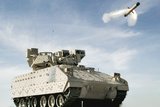
BM Oplot MBT. (Photo: Ukroboronprom)
Ukroboronprom has finally shipped the BM Oplot MBT ordered by the US three years ago.


The single BM Oplot main battle tank (MBT) ordered by the US in 2018 is finally on its way across the Atlantic, Ukroboronprom announced on 19 October.
The US ordered the tank from Ukrspecexport (the export division of Ukroboronprom) for the US Army’s experimental arsenal.
The estimated cost of the Oplot (in 2018 dollars) was $7 million but delivery to the US was delayed by export control wrangles related to thermal imaging components.
Made in Ukraine as an advanced variant of the T-84 MBT, Oplot is armed with a 125mm KBA-3 smoothbore gun, a 7.62mm KT-7.62 coaxial machine gun, and a pintle-mounted 12.7mm KT-12.7 heavy machine gun on the roof which can be fired by the commander under armour protection.
Shephard Defence Insight notes that the MBT carries 40 125mm rounds, of which 28 are in the automatic loader.
BM Oplot is powered by a 6TD-2 multi-fuel, six-cylinder, double-stroke liquid-cooled diesel engine coupled to a manual transmission. It can ford 1.8m of water which can be increased to 5m with preparation.
The US has ordered other samples of Ukrainian-made defence equipment; for example, the DoD recently bought new radar hardware from Iskra and in 2003 it acquired four T-80UD MBTs.
Related Equipment in Defence Insight




More from Land Warfare
-
![AUSA 2026: companies adapt munitions and missiles for greater effect at lower costs]()
AUSA 2026: companies adapt munitions and missiles for greater effect at lower costs
Rather than developing entirely new weapons, defence companies are looking to build on existing weapons and systems to deliver greater capability, control costs and accelerate fielding.
-
![With changing patterns in Middle Eastern procurement, is Europe missing out?]()
With changing patterns in Middle Eastern procurement, is Europe missing out?
Traditional suppliers are struggling to meet the Middle East’s armoured vehicle modernisation needs, creating opportunities for South Korean manufacturers and regional defence industries.
-
![AUSA 2026: CUAS market expands as suppliers target new threats and operational requirements]()
AUSA 2026: CUAS market expands as suppliers target new threats and operational requirements
New developments from MARSS, MyDefence, Mountain Horse Solutions and Rafael suggest that future counter-drone protection will increasingly depend on combining advanced detection, rapid interception and integrated defensive networks.