


FNSS advances Indonesian Kaplan APC programme as local production expands
FNSS and PT Pindad are progressing the Indonesian tracked armoured personnel carrier programme as local production gets under way.


Sorting through the massive amounts of operational intelligence available to those in theater is becoming easier as Lockheed Martin upgrades the data management and fusion capabilities of the enterprise that disseminates intelligence for the US Army. Through multiple projects, Lockheed Martin is modernizing many of the tools needed to support the Army’s Distributed Common Ground System’s (DCGS-A) intelligence missions.
DCGS is a family of systems that enables military analysts from all services to access shared intelligence. DCGS-A takes sensor data from all sources - signals, imagery and human intelligence - then integrates it into a common data format in a fused environment, making multi-source intelligence analysis possible.
“Army intelligence analysts increasingly rely on DCGS-A for their information and intelligence data,” said Jim Quinn, vice president of C4ISR Systems with Lockheed Martin IS&GS-Defense. “Providing improved fusion and data management tools will enhance DCGS-A performance while reducing manual efforts that benefit both analysts and decision-makers across the Army, its coalition partners and the greater intelligence community.”
Lockheed Martin is supporting the Army’s efforts to modernize the capabilities of DCGS-A Version 3.1, currently fielded in Afghanistan. This software version’s primary objective is to meet urgent operational needs for more and better intelligence. To ensure that intelligence is not corrupted or lost when transferred between heterogeneous intelligence systems, Lockheed Martin is incorporating a data management and transfer capability - Data Mover - which enables soldiers to move data between disparate databases while preserving data integrity and previously identified associations made through intelligence analysis. Another new capability automatically merges, or fuses, intelligence data, allowing objects and associations obtained from intelligence to be refined, giving soldiers a more coherent view of the battlespace.
Lockheed Martin is also modernizing the user interfaces and porting the software for the ACE Block II All-Source Fusion subsystem and the single source subsystem to a Linux platform. This will significantly reduce hardware and software sustainment costs and simplify operator workflows for both systems.
The DCGS enterprise is interconnected by a robust communications structure that enables seamless, real-time, multi-agency intelligence sharing and collaboration - DCGS Integration Backbone (DIB). Lockheed Martin is also upgrading the DIB, which supports real-time ISR data query and retrieval capabilities for the US and its coalition partners.
Source: Lockheed Martin

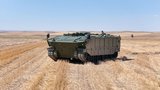
FNSS and PT Pindad are progressing the Indonesian tracked armoured personnel carrier programme as local production gets under way.
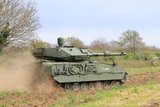
Firing trials of the Tulpar and Leonardo Hitfact Mk II combination follow an integration programme covering mechanical, electrical, electronic and software interfaces.
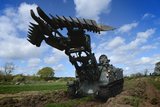
The news from Ukraine has again shown that antitank minefields and other obstacles on the battlefield, such as deep trenches, can play a key role in both offensive and defensive operations. Given this, there will always be a need to clear them, both during and after a conflict.
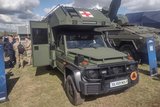
The UK Ministry of Defence has avoided being prescriptive in its search to replace the British Army’s Land Rover, meaning vehicle types being offered range from Land Rover Defender Wolf II and Humvee to the hybrid series Fering Pioneer. What does this mean for the procurement process?

The introduction of Ajax vehicles into British Army service was stopped after operator health issues were reported during an exercise, but manufacturer General Dynamics Land Systems UK believes work over the past 10 months has dealt with the problems.

Sweden, Croatia and France are pursuing different rocket artillery solutions as European armies seek greater reach, survivability and industrial resilience.

Connect with us on socials


