L3Harris delivers final bomb disposal robot
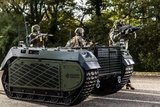
T7’s highly intuitive interface redefines ease of use with immersive force feedback. (Photo: L3Harris)
L3Harris has delivered the final EOD robot to the UK MoD for Project STARTER.


L3Harris Technologies has completed the delivery of the final EOD T7 robot to the UK MoD, completing its contract to replace its ageing fleet of remote-controlled vehicles.
In August 2017, the initial order for 56 robots was placed under a £55.3 million contract by the UK MoD.
A £36 million option was later exercised in July 2019, which increased the order to a total of 122 robots. The last of these robots has now been delivered.
These robots have been delivered in support of the MoD’s Project STARTER, which replaced the fleet in use since 1995.
The British Army has deployed the T7 in the UK, Cyprus and Gibraltar.
The T7’s precision control and human-like dexterity, as described by the manufacturers, shorten task completion time and improve mission effectiveness.
It features a rugged automotive-grade track system to provide excellent mobility and manoeuvrability.
L3Harris’ intuitive motion control and haptic feedback make operating the T7 as natural as moving one’s hand.
According to Shephard Defence Insight, key missions for the platform are HAZMAT operations, EOD, ISR, and SWAT missions.
Related Equipment in Defence Insight


More from Land Warfare
-
![Boxer lands another order as contracts and opportunities build momentum]()
Boxer lands another order as contracts and opportunities build momentum
As Germany prepares its €25 billion order under the Arminius framework – the biggest Boxer procurement to date – the platform could become an increasingly powerful contender in European competitions.
-
![British Army Land Rover replacement plan inches forward]()
British Army Land Rover replacement plan inches forward
The UK Ministry of Defence has proposed a selection date of May 2027 for the Land Rover replacement requirement, with deliveries expected through to 2036. Next month’s DVD exhibition will be a key shop window for bidders.
-
![Snow patrol and access all areas: the Arctic all-terrain vehicles market grows]()
Snow patrol and access all areas: the Arctic all-terrain vehicles market grows
The procurement and planned procurement of articulated tracked all-terrain vehicles is being driven by a need to replace older platforms and an acknowledgement of a capability gap for Arctic regions.
-
![Push strengthens for a second JLTV supplier]()
Push strengthens for a second JLTV supplier
A move, launched in May, could lead to a second supplier for the US Marines Corps’ Joint Light Tactical Vehicle requirement. Meanwhile, Wisconsin elected representatives have been pushing for necessary funding to be included in the FY27 budget.