


How laser weapons could transform the economics of European air defence (Podcast)
Former UK Defence Secretary Lord John Hutton examines how drones, missiles, laser weapons and procurement pressures are reshaping European air defence.


Honeywell 360 Display is designed to increase visibility and reduce the need to consult additional instruments. (Photo: Honeywell)
With situational awareness a perennial issue for operators of military vehicles, Honeywell launched its 360 Display on 10 October at the AUSA 2022 exhibition in Washington DC.
The system is designed to increase driver and crew reaction speeds, aiding situational awareness in hazardous and low-visibility conditions in addition to reducing the need to consult additional instruments.
It is a wearable, stereoscopic, mixed-reality head-mounted display that uses a series of sensors and exterior cameras to feed information directly to the headset and provide a high-resolution 360° view of the terrain.
The Honeywell 360 Display simulates natural vision and provides a high-resolution, ultra-low-latency
Our news & analysis is now part of Defence Insight®
A Basic-level or higher Defence Insight subscription is now required to view this content.

Former UK Defence Secretary Lord John Hutton examines how drones, missiles, laser weapons and procurement pressures are reshaping European air defence.
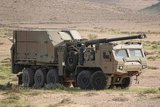
Singapore has confirmed plans to introduce a fully automated howitzer alongside an emerging precision-strike capability whose weapon type and deployment status have not been disclosed.

The Pentagon's push to accelerate counter-drone procurement is opening new opportunities for defence companies as it seeks to bring emerging technologies into operational service more quickly.
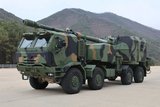
Less than two months after winning a contract from the US Army for six prototype K9 mobile howitzers, Hanwha Defense USA has received an order for another three. The company will show a platform at AUSA 2026.
The Association of the US Army’s flagship conference and exhibition takes place in Washington, DC from 12 to 14 October. Shephard takes a look at what might be in store at the 2026 show, with uncrewed and counter-uncrewed systems and platforms under the spotlight.

In Conversation… Military communications must adapt to a rapidly evolving battlespace, characterised by decentralised forces and an increasingly contested electromagnetic spectrum. To survive and thrive, it is vital to prioritise resilient systems and networks, Faisal Munir, President – Mission-Critical Communications at L3Harris Technologies, told Shephard’s Gerrard Cowan.

Connect with us on socials


