HIMARS rising: sales, industrial cooperation and missile tests are driving the weapon forward
The first Australian-manufactured GMLRS missiles are test fired at the Woomera Test Range in South Australia. (Photo: Australian Department of Defence)
Australia’s milestone Guided Multiple Launch Rocket System test and a wave of fresh contracts and production ramp-ups highlight the building momentum behind long-range strike systems globally, with HIMARS leading the way.


The clamour for long-range fires has seen a surge in orders for systems such as the Hanwha Defense K239 Chunmoo, Elbit Systems PULS (Precise and Universal Launching System) and Lockheed Martin M142 High Mobility Artillery Rocket System (HIMARS).
HIMARS in particular has been riding the crest of this wave, with new missiles with longer range and improved capability in development, along with fresh industrial agreements to support capacity as orders continue to grow.
More than US$1.2 billion of orders have been placed or approved in the past month, while a new industrial agreement has been signed with Estonia. An agreement was also signed with the US Department of Defense (DoD) to increase Precision Strike Missiles (PrSM) manufacture.
Related Articles
Estonia takes delivery of six HIMARS
US Army’s Precision Strike Missile moves into production phase after test successes
US Precision Strike Missile makes combat debut in Operation Epic Fury
On 13 April, the Australian government announced the successful test-fire of the first locally produced Guided Multiple Launch Rocket System (GMLRS) missiles from a HIMARS at the Woomera Test Range in South Australia. Australia is the first country outside the US to manufacture GMLRS missiles.
First non-US GMLRS missile fired
Australia is a leading user of the HIMARS system, driven by a strong infrastructure of testing facilities and the government’s Guided Weapons and Explosive Ordnance (GWEO) worth A$1 billion ($730 million) which aims to grow indigenous capability.
This firing follows the opening of a new facility for missile manufacture at Port Wakefield, South Australia in December 2025. The delivery of the first tranche of Australian-manufactured GMLRS, together with the subsequent live-fire demonstration, completed the final milestone in the fulfilment of the Guided Weapons Production Capability Risk Reduction Activity contract.
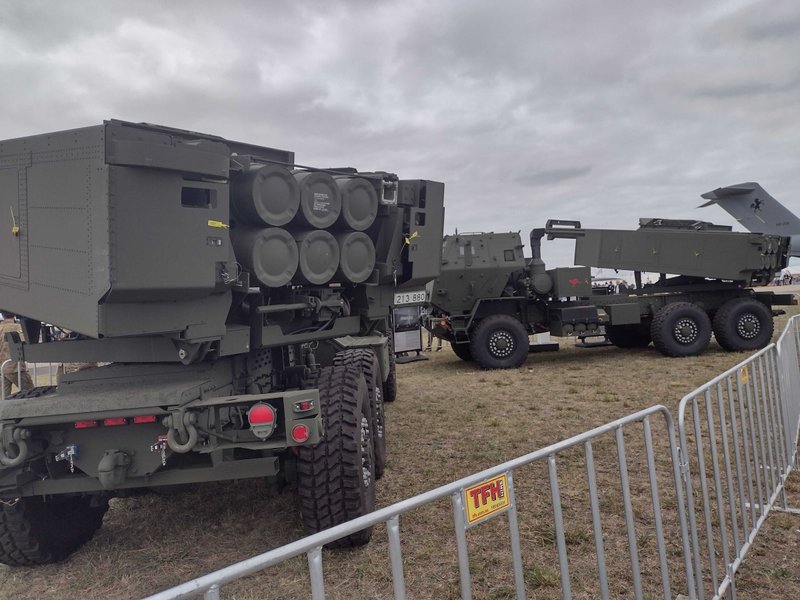
The Australian government argues that the effort “will provide a pathway for future long‑range fires munitions – such as the PrSM and hypersonic weapons – to be locally manufactured.
“Australian suppliers will be progressively introduced into the GMLRS supply chain [under a government] A$320 million commitment to [support] local companies to manufacture GMLRS components.”
The launch was supported by the 14th Regiment, Royal Australian Artillery of the Australian Army’s 10th Brigade.
In August last year, Exercise Talisman Sabre 2025 saw the first live firing of the Australian HIMARS using the PrSM, with Australia approved for a further 48 systems a month later.
The country had only received its first systems the previous March. At the time, Lockheed Martin outlined an ambitious delivery schedule for HIMARS with another six to be delivered before mid-April 2025, 12 in 2026 and the remaining 22 before the end of 2028.
PrSM to take HIMARS to next level
Lockheed Martin and users see the PrSM as a way to provide a substantial strategic advantage to take range beyond the 300-400km of existing missiles to 500km and eventually out possibly as far as 1,000km under PrSM Increment 4.
The Army Portfolio Acquisition Executive for Fires, with support from the US Army Combat Capabilities Development Command Aviation and Missile Center, hosted a PrSM Increment 4 Industry Day on 23 March 2026, to provide potential industry partners an overview of this rapid prototyping effort.
Initial project awards are anticipated in late FY2026, with a series of competitive fly-off events spanning 2027 and 2028. The fly-offs will prioritise three foundational capabilities: 1,000km range, compatibility with HIMARS launchers with extensibility to future launcher platforms, and ability to neutralise, suppress or destroy moving maritime and relocatable land targets.
In March, Lockheed Martin announced it had successfully completed the first flight test of the PrSM Increment 2, demonstrating its new multi-mode seeker and ability to engage moving maritime targets. The missile met test objectives in a 350km flight launching from a HIMARS, deploying protective covers and capturing a suite of performance data that will be used to validate the system.
Later in the month, the US DoD in partnership with Lockheed Martin announced a new framework agreement to accelerate the production of the PrSM. Under the agreement, Lockheed Martin will make targeted investments in advanced tooling, facility modernisation and critical testing equipment to slash production lead times.
Users line up and systems enter service
Baltic countries Lithuania, Latvia and Estonia have identified the weapon as a key capability. Estonia’s first systems entered service in December 2025 and more were ordered earlier this month, while Lithuania expects to receive its first of eight systems this year and Latvia is set to receive the first of six HIMARS next year.
Also on Europe’s eastern front, Sweden was approved for the purchase of 20 HIMARS under a possible Foreign Military Sale worth up to $920 million which would include GMLRS unitary pods, M57 Army Tactical Missile (ATACM) pods and other missiles and systems.
In a different but equally fraught geo-political situation, in December Taiwan, which already operates the system, was approved for the purchase of 82 HIMARS, 420 ATACM missiles and 756 GMLRS pods. The deal would be worth up to $4 billion.
In the past 12 months, Bahrain has also been approved to buy HIMARS.
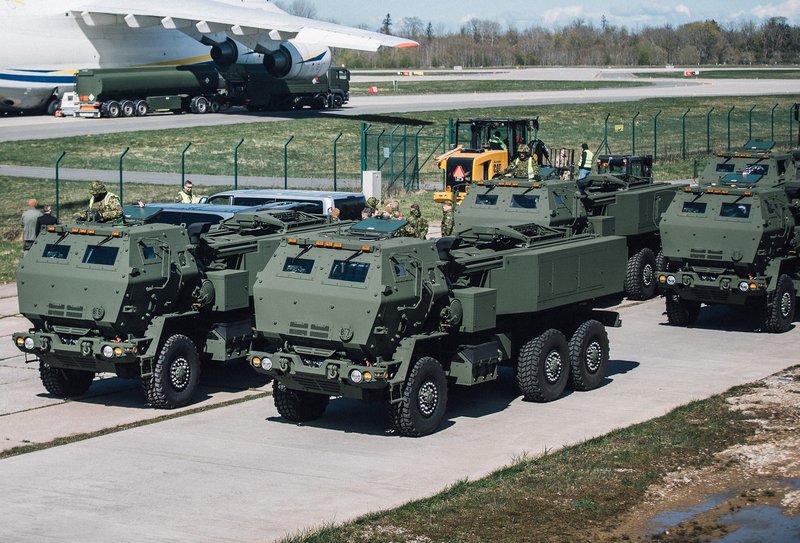
As well as in Europe and continental US, HIMARS has been introduced in the Indo-Pacific region with the US Army 25th Infantry Division (25th ID) Division Artillery (DIVARTY), which transitioned to long-range precision fires. The delivery of its first three launchers to the division in Hawaii occurred in July last year. Eventually, 16 launchers will replace eight existing 105mm and six 155mm howitzers.
The 25th ID DIVARTY has two battalions with howitzers: the 3rd Battalion, 7th Field Artillery Regiment and the 2nd Battalion, 11th Field Artillery Regiment. The howitzers will be consolidated into 3rd Battalion while the HIMARS will move into the 2nd Battalion.
US Army division artillery commander Col Daniel Von Benken said: “In about 180 days, we went from a towed cannon battalion to a long-range fires battalion with 16 HIMARS weapon systems. We can now do the things that we said we needed to do.”
Production ramps up and plans launched to keep up
The US DoD-Lockheed Martin agreement on PrSM and Australia’s rapid move into GMLRS missile manufacture, and potentially PrSM, are just part of the effort to keep up with demand from existing customers and expected approved procurements.
Since the start of the Ukraine-Russia war, the company has more than doubled its annual rate of HIMARS manufacture, going from 48 at the start of the conflict to 96 at end of 2024.
As part of an effort to improve support of HIMARS in Baltic and surrounding countries, Lockheed Martin has worked to create a cluster of support capabilities. A HIMARS component maintenance capability is being established in Estonia, which will be provided by local companies. A capability will also be established in Latvia, Lithuania, Poland and Finland in a move to build broader regional expertise and ensure the availability of required services locally.
With a likely backlog of more than 100 approved additional HIMARS, which excludes US and contracted orders, Lockheed Martin’s production rate will likely need to be maintained to fulfil orders within three years.
Related Programmes in Defence Insight
Related Equipment in Defence Insight




More from Land Warfare
-
![FNSS advances Indonesian Kaplan APC programme as local production expands]()
FNSS advances Indonesian Kaplan APC programme as local production expands
FNSS and PT Pindad are progressing the Indonesian tracked armoured personnel carrier programme as local production gets under way.
-
![British Army's open plan draws diverse offerings for Land Rover replacement]()
British Army's open plan draws diverse offerings for Land Rover replacement
The UK Ministry of Defence has avoided being prescriptive in its search to replace the British Army’s Land Rover, meaning vehicle types being offered range from Land Rover Defender Wolf II and Humvee to the hybrid series Fering Pioneer. What does this mean for the procurement process?
-
![DVD 2026: British Army’s Ajax back in the hands of users as part of a gradual return]()
DVD 2026: British Army’s Ajax back in the hands of users as part of a gradual return
The introduction of Ajax vehicles into British Army service was stopped after operator health issues were reported during an exercise, but manufacturer General Dynamics Land Systems UK believes work over the past 10 months has dealt with the problems.