


Companies downselected for British Army vehicle programme
It is believed that three companies did not make the downselect but a dark horse in Spain’s Iturri is believed to have got through.


RFV is housed on a Polaris RZR S4 1000 Turbo base drive-by-wire platform. (Photo: DARPA)
DARPA is preparing the next steps in its Robotic Autonomy in Complex Environments with Resiliency (RACER) off-road UGV programme, with two field experiments planned in the US this year.
The programme is currently in the first phase. DARPA aims to develop and demonstrate, in a realistic environment, the ability of autonomous platforms to travel at equivalent speeds to crewed vehicles.
The first test is scheduled for March at the National Training Center in Fort Irwin, California, to evaluate improvements in terms of speed and human interactions.
Stuart Young, RACER programme manager in the Tactical Technology Office at DARPA, explained to Shephard that researchers
Our news & analysis is now part of Defence Insight®
A Basic-level or higher Defence Insight subscription is now required to view this content.


It is believed that three companies did not make the downselect but a dark horse in Spain’s Iturri is believed to have got through.
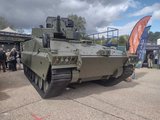
Air defence and counter-drone weapons continue to be developed, tested and demonstrated in anticipation of growing demand, with most solutions designed to be platform-agnostic and readily integrated onto suitable platforms.
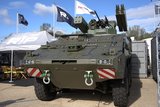
The US Army began its search for a 155mm tracked mobile tactical cannon in an effort that Shephard forecasts could be worth billions of dollars. Meanwhile, the UK DVD exhibition saw companies showcase their offerings for the British Army’s mobility and air defence requirements.
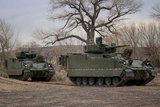
The development demonstrates how the platform could provide additional firepower and growth potential while the US Army progresses its long-term replacement for the Bradley.
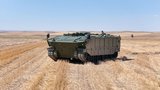
FNSS and PT Pindad are progressing the Indonesian tracked armoured personnel carrier programme as local production gets under way.
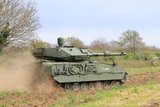
Firing trials of the Tulpar and Leonardo Hitfact Mk II combination follow an integration programme covering mechanical, electrical, electronic and software interfaces.

Connect with us on socials


