Active vehicle protection comes to the forefront as Trophy and Iron Fist secure contracts
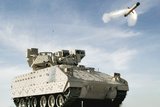
Trophy is shown here fitted to a Leopard tank with radars on the turret to left and right of the barrel. (Photo: Rafael)
Experience on the battlefield is accelerating the adoption of active protection systems as technologies continue to evolve to reflect shifting global defence needs.


Active protection systems to defend large vehicles and main battle tanks (MBTs) first appeared as Russian systems in the late 1970s and 1980s, before truly coming to the forefront of technology through Israeli efforts in the 2000s.
The majority are modular and agnostically designed to allow them to be bolted on, federated or integrated, with two Israeli systems – Rafael Armaments Development Authority’s Trophy and Elbit Systems Iron Fist – proving particularly popular.
The Rafael system is sold through EuroTrophy, a joint venture with General Dynamics Europe Land Systems, which along with Iron Fist has announced contracts in the past
Our news & analysis is now part of Defence Insight®
A Basic-level or higher Defence Insight subscription is now required to view this content.


More from Land Warfare
-
![AUSA 2026: companies adapt munitions and missiles for greater effect at lower costs]()
AUSA 2026: companies adapt munitions and missiles for greater effect at lower costs
Rather than developing entirely new weapons, defence companies are looking to build on existing weapons and systems to deliver greater capability, control costs and accelerate fielding.
-
![AUSA 2026: CUAS market expands as suppliers target new threats and operational requirements]()
AUSA 2026: CUAS market expands as suppliers target new threats and operational requirements
New developments from MARSS, MyDefence, Mountain Horse Solutions and Rafael suggest that future counter-drone protection will increasingly depend on combining advanced detection, rapid interception and integrated defensive networks.
-
![US Army seeks CAML-Lite autonomous launcher prototypes for 2027 live-fire trials]()
US Army seeks CAML-Lite autonomous launcher prototypes for 2027 live-fire trials
The optionally crewed, C-130-transportable platforms would combine modular offensive and defensive fires with autonomous resupply, with demonstrations planned for Talisman Sabre 2027.