Constellium armour for US Army’s CVP
Constellium has received a contract from the US Army’s Tank Automotive Research Development and Engineering Center (TARDEC) to supply its KEIKOR 2139 blast-protective alloy, the company announced on 28 September.
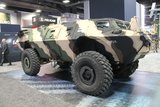
The blast protection solution will be used for the the integrated hull capsule of the Combat Vehicle Prototype (CVP).
Constellium’s KEIKOR 2139 is an aluminium alloy with a specific blast temper specifically designed to resist blast events. According to the company it has demonstrated an improvement of 55% over standard alloy in terms of permanent deflection.
Erik Polsen, TARDEC’s chief engineer for CVP survivability, said: ‘Constellium’s KEIKOR 2139 aluminium alloy met the necessary performance properties and characterised manufacturing process for the performance and packaging requirements that we were looking for in our hull structure.
‘What’s more, once we selected the material, we were able to work with Constellium closely to begin the alloy processing quickly, and they were able to cut the originally-quoted delivery time by more than half.’



More from Land Warfare
-
![AUSA 2026: BAE Systems pushes air defence capability with two new demonstrators]()
AUSA 2026: BAE Systems pushes air defence capability with two new demonstrators
The company's new artillery demonstrator is intended to engage incoming missiles and ground targets, while a separate microwave system focuses on uncrewed aerial threats.
-
![AUSA 2026: Bale Defence adds CUAS role to RTV6 platform]()
AUSA 2026: Bale Defence adds CUAS role to RTV6 platform
An elevated remote weapon station, radar sensor and 12.7mm machine gun provide the Australian vehicle with a potential mobile counter-drone capability.
-
![AUSA 2026: Northrop Grumman targets lower-cost air defence with $100 million Raid Hunter investment]()
AUSA 2026: Northrop Grumman targets lower-cost air defence with $100 million Raid Hunter investment
At AUSA 2026, Northrop Grumman revealed it had invested US$100 million in its Raid Hunter gun-based air defence capability, which the company claims could reduce the cost of individual engagements by 95.5% compared with interceptor missiles.