


Companies downselected for British Army vehicle programme
It is believed that three companies did not make the downselect but a dark horse in Spain’s Iturri is believed to have got through.


Colt Canada has been awarded a contract to replace the Lee Enfield rifle used by the Canadian Rangers, it was announced on 23 June.
The around $1.21 million contract will see the rangers test the new rifle design in the summer of 2015. After the tests, design amendments will be made and Colt Canada will be awarded a second contract to produce 6,500 rifles. These rifles will be phased in from mid-2016 to late-2019.
The rangers are a part of the Canadian armed forces reserve and are detached across coastal, northern and isolated parts of Canada. Colt Canada has been a small arms strategic source for Canada since it was first selected in 1976.
The current Lee Enfield rifles are being replaced due to the declining availability of their spare parts, which may be completely unavailable after 2017.
A Request for Proposal (RFP) for the new Ranger Rifle design was released in September 2014, with Stoeger Canada the successful contender with a customised TIKKA T3 Compact Tactical Rifle. Colt Canada assisted the government in the competitive process to select the design and will produce the rifle for the Canadian Rangers.
Julian Fantino, Associate Minister of National Defence, said: ‘The Canadian Rangers play a vital role in Canada’s ability to assert sovereignty in the north, and are critically important in the service they provide to the Canadian armed forces. Our government is committed to ensuring they have the tools they need, and on behalf of our government, I want to thank them for all they do to keep our borders and citizens safe and secure.’


It is believed that three companies did not make the downselect but a dark horse in Spain’s Iturri is believed to have got through.
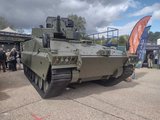
Air defence and counter-drone weapons continue to be developed, tested and demonstrated in anticipation of growing demand, with most solutions designed to be platform-agnostic and readily integrated onto suitable platforms.
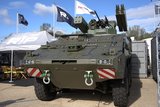
The US Army began its search for a 155mm tracked mobile tactical cannon in an effort that Shephard forecasts could be worth billions of dollars. Meanwhile, the UK DVD exhibition saw companies showcase their offerings for the British Army’s mobility and air defence requirements.
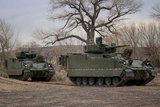
The development demonstrates how the platform could provide additional firepower and growth potential while the US Army progresses its long-term replacement for the Bradley.
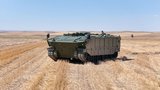
FNSS and PT Pindad are progressing the Indonesian tracked armoured personnel carrier programme as local production gets under way.
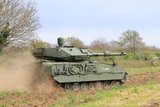
Firing trials of the Tulpar and Leonardo Hitfact Mk II combination follow an integration programme covering mechanical, electrical, electronic and software interfaces.

Connect with us on socials


