Can Iranian air defence systems compete for exports?
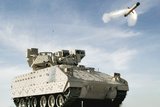
An Iranian AD-08 mobile air defence system deployed with four IR homing missiles in the ready-to-launch position. (Photo: Islamic Republic of Iran)
Iran’s defence industry is now producing a range of surface-to-air missile systems and has begun to market them internationally. Using what appears to be a mixture of original and reverse-engineered elements, how do they stack up compared to other countries’ offerings?


For some time, Iran has been manufacturing numerous different antitank guided weapons and long-range surface-to-surface rockets, which have been exported in significant numbers, particularly to other countries in the Middle East.
The Islamic Republic of Iran has expanded into other areas of missile technology including mobile surface-to-air missiles (SAMs), and it remains to be seen whether these will start to be sold abroad en masse as well.
A range of SAMs is now being promoted by the Iranian Ministry of Defence and Armed Forces Logistics: the AD family, where the first part of the designation, AD, stands for air defence
Our news & analysis is now part of Defence Insight®
A Basic-level or higher Defence Insight subscription is now required to view this content.

More from Land Warfare
-
![Front-line support: how UK industry is helping tackle Ukraine’s landmine challenges]()
Front-line support: how UK industry is helping tackle Ukraine’s landmine challenges
Pearson Engineering has provided equipment and engineering expertise to the Armed Forces of Ukraine since the beginning of the full-scale Russian invasion in 2022. The British company is now working to deepen engagement with the Ukrainian defence industry, expanding its support for the country’s population and laying the foundations for future technological innovation.
-
![AUSA 2026: companies adapt munitions and missiles for greater effect at lower costs]()
AUSA 2026: companies adapt munitions and missiles for greater effect at lower costs
Rather than developing entirely new weapons, defence companies are looking to build on existing weapons and systems to deliver greater capability, control costs and accelerate fielding.
-
![AUSA 2026: industry looks to make commercial platforms a military reality]()
AUSA 2026: industry looks to make commercial platforms a military reality
With a production rate of more than 10 million vehicles annually, the US commercial car and vehicle manufacturing base is second only to China. Defence companies are looking at how the vehicles, technology and manufacturing capability can support programmes.
-
![With changing patterns in Middle Eastern procurement, is Europe missing out?]()
With changing patterns in Middle Eastern procurement, is Europe missing out?
Traditional suppliers are struggling to meet the Middle East’s armoured vehicle modernisation needs, creating opportunities for South Korean manufacturers and regional defence industries.
-
![AUSA 2026: CUAS market expands as suppliers target new threats and operational requirements]()
AUSA 2026: CUAS market expands as suppliers target new threats and operational requirements
New developments from MARSS, MyDefence, Mountain Horse Solutions and Rafael suggest that future counter-drone protection will increasingly depend on combining advanced detection, rapid interception and integrated defensive networks.