British Army exploring tech lessons from Ukraine
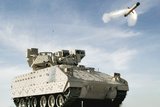
The UK has taken note of how Ukrainian forces have applied advanced technology to existing platforms. (Photo: UK MoD/ Crown Copyright)
The UK is looking at how technologies used in the war in Ukraine and the country’s support of Ukrainian forces can be rapidly introduced into British Army service.


UK Armed Forces Minister James Heappey has said the British Army is exploring technologies that have been successful in Ukraine and could be pulled into service.
Responding to a Parliamentary question, Heappey said: ‘Additionally, as we’ve learnt through our support of the Ukrainian Armed Forces, the draping of advanced technologies on to existing platforms can rapidly transform capability.
‘The Army is exploring which technologies that have been successful in Ukraine could similarly be pulled through onto the existing force at pace.’
Related Articles
British Army resumes Ajax training as review criticises MoD procurement
Germany increases armoured vehicle shipments supply as more Marders head for Ukraine and Greece
UK trials minehunting mothership and autonomous vessels together for the first time
Heappey made the comments as part of a wider answer on when the UK will be able to deploy a fully digitised modern warfighting division.
In response, the Minister said the British Army’s 3rd Division is currently deployable.
He added: ‘Future Soldier will see this Division modernised by 2030 with a variety of new capabilities built around a digitally networked combination of Ajax, Boxer, Challenger 3, long range precision fires and un-crewed aerial systems.’
Future Soldier emerged from the Integrated Review of 2021.




More from Land Warfare
-
![AUSA 2026: companies adapt munitions and missiles for greater effect at lower costs]()
AUSA 2026: companies adapt munitions and missiles for greater effect at lower costs
Rather than developing entirely new weapons, defence companies are looking to build on existing weapons and systems to deliver greater capability, control costs and accelerate fielding.
-
![AUSA 2026: industry looks to make commercial platforms a military reality]()
AUSA 2026: industry looks to make commercial platforms a military reality
With a production rate of more than 10 million vehicles annually, the US commercial car and vehicle manufacturing base is second only to China. Defence companies are looking at how the vehicles, technology and manufacturing capability can support programmes.
-
![With changing patterns in Middle Eastern procurement, is Europe missing out?]()
With changing patterns in Middle Eastern procurement, is Europe missing out?
Traditional suppliers are struggling to meet the Middle East’s armoured vehicle modernisation needs, creating opportunities for South Korean manufacturers and regional defence industries.
-
![AUSA 2026: CUAS market expands as suppliers target new threats and operational requirements]()
AUSA 2026: CUAS market expands as suppliers target new threats and operational requirements
New developments from MARSS, MyDefence, Mountain Horse Solutions and Rafael suggest that future counter-drone protection will increasingly depend on combining advanced detection, rapid interception and integrated defensive networks.