BAE Systems to complete M109A7 LRIP


BAE Systems has been awarded a low-rate initial production (LRIP) contract option worth $245.3 million by the US Army to complete low rate initial production of the M109A7 self-propelled howitzer and M992A3 ammunition carrier, the company announced on 30 October.
Under M109A7 programme, the company is upgrading the vehicle to provide a significant improvement over its predecessor, the M109A6 Paladin Self-Propelled Howitzer.
The upgrade keeps the existing main armament and cab structure of the M109A6, and replaces the vehicle’s chassis structure with a new design that increases survivability and allows for the integration of Bradley common drive-train and suspension components. The on-board power generation, distribution and management system are also improved, along with high-voltage gun drive and projectile ramming systems.
Adam Zarfoss, director of Artillery and Bradley programs, BAE Systems, said: ‘The success of this programme is directly attributable to the partnership between the army and BAE Systems. We’ve worked as a team to bring this much needed enhanced combat capability to the soldier to address immediate needs while providing a platform that can support future growth as requirements evolve.’
BAE Systems was awarded a one-year base contract for the M109A7 in October 2013, and the first of two option year awards to produce an additional 18 vehicle sets in October 2014. The current exercise is for the second option year to produce an additional 30 sets. One set includes an M109A7 Paladin Self Propelled Howitzer (SPH) along with its battlefield companion, the M992A3 Carrier Ammunition, Tracked.
BAE Systems will deliver a total of 66 vehicle sets plus one additional SPH and associated kits, spares, and technical documentation to complete the LRIP phase.
Related Programmes in Defence Insight
Related Equipment in Defence Insight

More from Land Warfare
-
![AUSA 2026: XM30 competitors keep their cards close as US Army decision approaches]()
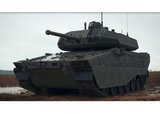
AUSA 2026: XM30 competitors keep their cards close as US Army decision approaches
The US Army’s XM30 programme is an ambitious multi-billion-dollar effort to replace Bradley infantry fighting vehicles. American Rheinmetall and General Dynamics Land Systems are fighting for the contract.
-
![AUSA 2026: AM General boss confirms 300-plus JLTV A2s delivered as export orders approach]()
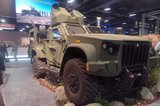
AUSA 2026: AM General boss confirms 300-plus JLTV A2s delivered as export orders approach
The Joint Light Tactical Vehicle programme for the US Marine Corps appears to be making progress, with AM General increasing production of its version while Oshkosh Defense has secured long-lead materials in anticipation of becoming a second supplier.
-
![AUSA 2026: Bale Defence adds CUAS role to RTV6 platform]()
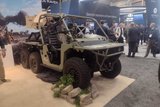
AUSA 2026: Bale Defence adds CUAS role to RTV6 platform
An elevated remote weapon station, radar sensor and 12.7mm machine gun provide the Australian vehicle with a potential mobile counter-drone capability.