The British Army’s Land Mobility Programme – all change but no progress?
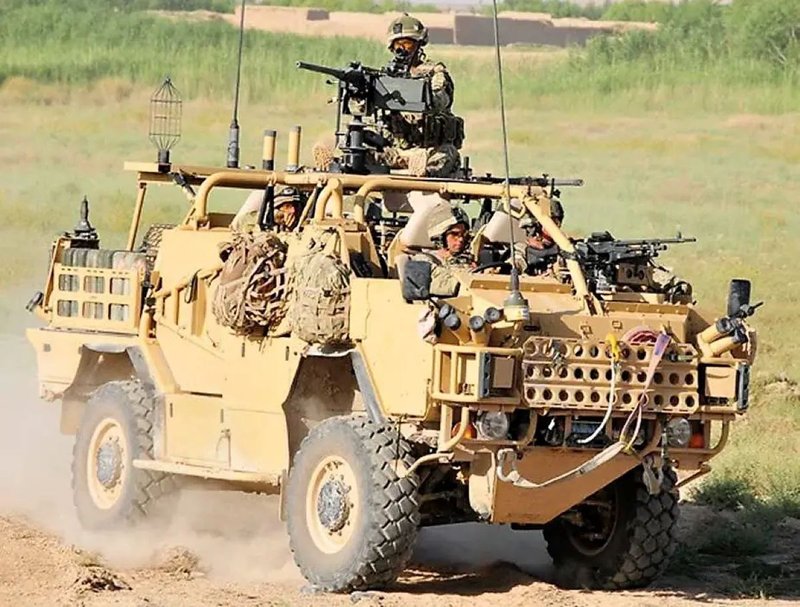
The Foxhound is one of a number of vehicles that could be replaced as part of the Land Mobility Programme. (Photo: British Army)
The UK’s Land Mobility Programme, an effort to replace thousands of British Army vehicles, may be about to undergo a radical change in direction.


Change seems to be the order of the day for the UK’s Land Mobility Programme (LMP). The programme has always been somewhat ephemeral, owing in large part to the Ministry of Defence’s (MoD) inability to define specific requirements. This has left observers and companies with only a general outline of what each component should look like. Now it appears that the government, while attempting to clarify the status of the programme, has muddied the waters even further.
Speaking in the House of Commons in October, UK Minister for Defence Readiness and Industry Luke Pollard MP delivered an update on the Light Protected Mobility (LPM) segment that appeared to radically change its direction.
“The LPM programme, as part of LMP, will deliver high-mobility protected vehicles…this will likely be achieved by modernising existing platforms to deliver greater utility and ability to operate as the host platform for new mission systems,” Pollard said.
Related Articles
Bidders for the British Army Land Mobility Programme stir as the process begins
This indicates a shift in the programme towards modernising existing platforms and away from procuring new ones.
The list of vehicles currently covered by the LPM consists of the Panther, Foxhound, Coyote, Husky and Jackal 2/3, with the Husky having already been retired. A key rationale behind the LMP is to rationalise the British Army’s vehicle fleet by consolidating each subcategory around a single platform. The decision to modernise existing vehicles instead would be a major break with this key tenet of the programme.
The motivation behind such a shift is most likely financial. With an estimated 2,000 vehicles covered by this category, it would likely be more cost-effective to upgrade existing platforms rather than replace them all. However, there is a real risk that this could be a false economy. While it might be cheaper in the short term, the costs are likely to manifest in the long run.
By maintaining such a diverse fleet, the MoD would be committing itself to more expensive logistical and maintenance requirements for the remainder of the vehicles’ service lives. Additionally, upgraded vehicles will have sooner out-of-service dates (OSDs) than new vehicles. Consequently, the MoD will face the prospect of rerunning the programme again in a decade or so.
Furthermore, current platforms are inherently limited by the technology available when they were procured. The MoD has previously stated that it wants the LPM to provide a modular vehicle that can accommodate a range of mission modules. This includes counter-uncrewed aerial system capabilities, a field which has been in a state of constant evolution since 2022.
Existing vehicles are constrained in the modular capability they can provide. Upgrading the existing fleet will lock in a technological bottleneck that could severely hamper its effectiveness. Given the rapid development cycle of new threats witnessed in Ukraine, the MoD risks operating vehicles equipped not for today’s war or even yesterday’s, but for the last decade’s war.
The transition to an upgrade also raises the question of who the likely contractor would be. There are currently five companies bidding for the LPM. One of these is Supacat, the manufacturer of the Jackal 2, Jackal 3 and Coyote. Consequently, Supacat would be the most likely contender to carry out an upgrade.
None of the other contenders have the UK capacity, or probable inclination, to carry out the necessary upgrades. It is possible that the MoD could contract the manufacturer of each vehicle to conduct its own upgrades; however, this approach could be more expensive and time-consuming compared to awarding a single lead contractor.
Category confusion in the LMP
The Medium Protected Mobility (MPM) category, or perhaps more accurately, the former medium category, also seems to be undergoing a major change. Again, speaking in the House of Commons, Pollard said that the LMP “comprises three sub-programmes: Heavy Protected Mobility, Light Protected Mobility and Light Mobility Vehicle”. This statement seems to eliminate the medium-protected category completely.
As Shephard previously reported, the reintroduction of the previously scrapped Heavy Protected Mobility (HPM) category has been expected for some time. This was a major topic of discussion among potential competitors at DSEI in September. What is surprising is the idea that MPM would be replaced by HPM.
The two categories are intended to fulfil vastly different requirements. The MPM category covers an estimated 1,400 vehicles and is intended to replace platforms such as the Mastiff, Wolfhound, Ridgback and Pinzgauer. Crucially, it is expected to have a gross vehicular mass (GVM) of between 18,500kg and 20,000kg, allowing two vehicles to be air transportable by an A400M.
The HPM category, meanwhile, was intended to replace the UK’s Bulldog fleet; however, the category was previously dropped from the LMP. Despite its exclusion from the programme, the capability requirement remains, with the Bulldog reaching its OSD by the end of the current decade. Consequently, Shephard previously forecast that the MoD would seek to procure 100 replacement vehicles to fulfil a similar C2 and reconnaissance role for the UK’s artillery platforms.
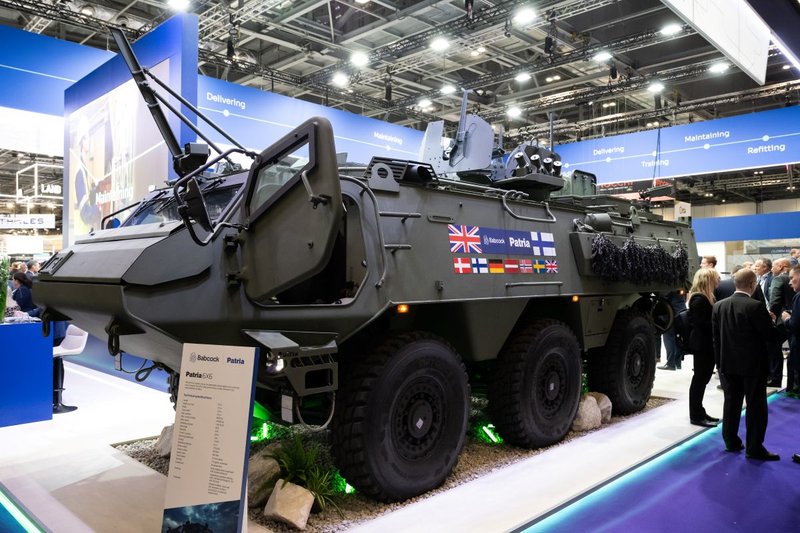
If MPM is to be replaced with HPM then the question becomes: what will the winning platform be? At DSEI 2025, Shephard understood that there were three potential candidates: the tracked BAE Systems Armored Multi-Purpose Vehicle, the IDV Superav 8×8 and the Patria 6×6. The most obvious candidate appears to be the Patria 6×6.
At DSEI, the UK government announced that it was officially joining the Common Armoured Vehicle System (CAVS) programme which is built around the 6×6. CAVS is currently in service with Finland, Latvia, Sweden and Ukraine, and is in the process of being procured by Germany and Denmark. It would be somewhat counterintuitive for the UK to join CAVS if it did not intend to procure the Patria 6×6.
Speaking to industry insiders, Shephard understands that this change has been met with some confusion. The government has not provided any clarification on what the new heavy category will entail. Speaking in the Commons, Pollard offered the rather unenlightening comment that HPM “will deliver a new heavy protected vehicle to army front line forces replacing existing protected mobility platforms”.
This is especially jarring given that the two categories differ so substantially. With MPM intended to provide armoured transport that can be air deployable, and HPM designed for recce functions in support of artillery, how will the MoD deliver a vehicle that will fulfil both roles? Additionally, how many will be procured?
While the existing numbers for both categories are estimates, they provide a reasonable guide as to the scope of each category. It seems inconceivable that the MoD would procure 1,500 Patria 6×6s, for instance. There is a real risk that the MoD will procure more vehicles than necessary for the heavy role, but not enough to fulfil the medium role.
A recurring issue of the LMP has been the MoD’s inability to clearly define it. These recent comments from the government have only exacerbated this problem. Until the MoD is willing to clearly outline what it requires for each category, the programme remains at risk of going off the road completely.
Related Programmes in Defence Insight
Land Mobility Programme (Medium Protected Mobility) [UK]
Land Mobility Programme (Light Protected Mobility) [UK]
Land Mobility Programme (Light Mobility Vehicle) [UK]
Related Equipment in Defence Insight

More from Land Warfare
-
![British Army's open plan draws diverse offerings for Land Rover replacement]()
British Army's open plan draws diverse offerings for Land Rover replacement
The UK Ministry of Defence has avoided being prescriptive in its search to replace the British Army’s Land Rover, meaning vehicle types being offered range from Land Rover Defender Wolf II and Humvee to the hybrid series Fering Pioneer. What does this mean for the procurement process?
-
![DVD 2026: British Army’s Ajax back in the hands of users as part of a gradual return]()
DVD 2026: British Army’s Ajax back in the hands of users as part of a gradual return
The introduction of Ajax vehicles into British Army service was stopped after operator health issues were reported during an exercise, but manufacturer General Dynamics Land Systems UK believes work over the past 10 months has dealt with the problems.
-
![Europe commits to long-range fires but countries move in different directions]()
Europe commits to long-range fires but countries move in different directions
Sweden, Croatia and France are pursuing different rocket artillery solutions as European armies seek greater reach, survivability and industrial resilience.