South Korean companies turning necessity into export opportunity
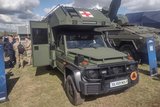
The AS21 Redback is an example of the exportability of South Korean systems. (Photo: Hanwha Defense)
South Korea’s particular geopolitical situation and threat environment has created a defence industry ecosystem of substantial size and breadth.


The South Korean government’s desire to create indigenous capabilities across all its armed forces, ranging from fighter aircraft and submarines to land vehicles, has seen South Korean industry step up to meet the country’s unique requirements. In the land domain, this has led to broad export successes for the country.
The production of vehicles is led by Hyundai Rotem and Hanwha Defense and Aerospace; two large entities expanded further by takeovers and consolidation. Both companies are strongest in their local markets but build on that to sell widely across Europe, Asia and the Middle East.
Hanwha’s K9 self-propelled howitzer (SPH) is probably the
Our news & analysis is now part of Defence Insight®
A Basic-level or higher Defence Insight subscription is now required to view this content.

More from Land Warfare
-
![British Army's open plan draws diverse offerings for Land Rover replacement]()
British Army's open plan draws diverse offerings for Land Rover replacement
The UK Ministry of Defence has avoided being prescriptive in its search to replace the British Army’s Land Rover, meaning vehicle types being offered range from Land Rover Defender Wolf II and Humvee to the hybrid series Fering Pioneer. What does this mean for the procurement process?
-
![DVD 2026: British Army’s Ajax back in the hands of users as part of a gradual return]()
DVD 2026: British Army’s Ajax back in the hands of users as part of a gradual return
The introduction of Ajax vehicles into British Army service was stopped after operator health issues were reported during an exercise, but manufacturer General Dynamics Land Systems UK believes work over the past 10 months has dealt with the problems.
-
![Europe commits to long-range fires but countries move in different directions]()
Europe commits to long-range fires but countries move in different directions
Sweden, Croatia and France are pursuing different rocket artillery solutions as European armies seek greater reach, survivability and industrial resilience.