


AUSA 2023: Quantum Systems expands UAV family with Twister
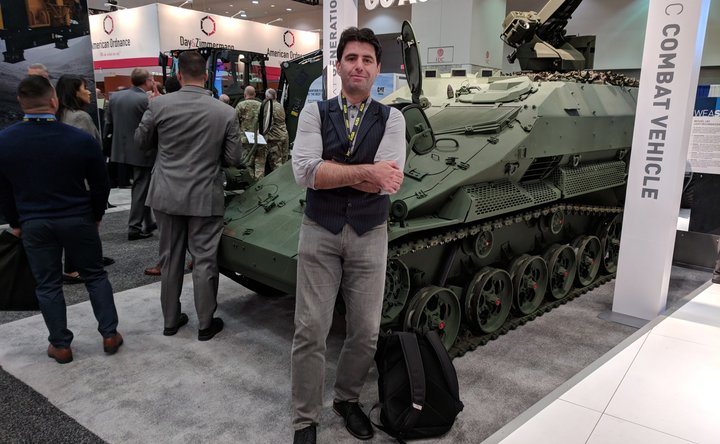
The Twister UAV on display at Quantum Systems' AUSA 2023 stand. (Photo: Wilder Alejandro Sanchez)
The Twister UAV, which has a flight endurance of 75 minutes and a wingspan of 1.25m, was on display for the first time at AUSA in Washington earlier this month.


Quantum Systems has confirmed the expansion of its family of systems via its newest platform, the short-range/short-endurance electric vertical take-off and landing (eVTOL) unmanned aerial vehicle (UAV) Twister.
Twister, which has a flight endurance of 75 minutes, a 10km range and a ceiling of 4,000m, can be disassembled into six parts and carried via a rucksack. The UAV has a wingspan of 1.25m and a cruise speed of 20 m/s. It can be assembled and ready to fly in around two minutes, according to Quantum Systems, and features onboard processing powered by an NVIDIA Jetson Orin AI/Mission processor.
David Sharpin,
Our news & analysis is now part of Defence Insight®
A Basic-level or higher Defence Insight subscription is now required to view this content.



More from Land Warfare
-
![Billion-dollar Belgium deal for NASAMS creates multinational air defence system]()
Billion-dollar Belgium deal for NASAMS creates multinational air defence system
The National Advanced Surface-to-Air Missile System (NASAMS) is in service on five continents with more than 120 platforms delivered. The system will now form part of Belgium’s Blue Dome air defence system alongside new orders for Skyranger air defence and Thales radar systems.
-
![Poland land systems focus: €31 billion spending drive boosts domestic production ambitions]()
Poland land systems focus: €31 billion spending drive boosts domestic production ambitions
Poland’s potential €53 billion land procurement pipeline could give it one of Europe’s largest armoured vehicle fleets, with local production, technology transfer and future exports central to the strategy.
-
![Can NATO’s CUAS marketplace turn urgent demand into deliveries?]()
Can NATO’s CUAS marketplace turn urgent demand into deliveries?
Framework contracts and leasing options aim to shorten acquisition timelines, while manufacturing partnerships could help suppliers scale production to meet allied demand.
-
![NATO looks for answers to overcome standards hurdles and improve procurement]()
NATO looks for answers to overcome standards hurdles and improve procurement
NATO is looking to artificial intelligence to provide integration between different C2 systems to create a common operational picture, potentially offering a faster route to interoperability than the slow-moving processes of NATO standards committees.




