Army-2022: New Russian recon vehicles displayed, but capability gap remains
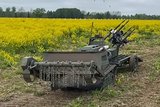
The VPK BRM is a relatively new design but will require extensive trials and development before service entry. (Photo: via author)
VPK displayed a new variant of its developmental BRM reconnaissance vehicle, while UVZ exhibited an upgraded version of the BRM-1K. Neither seem viable candidates for filling situational awareness capability gaps for Russian mechanised infantry units.


A number of Russian manufacturers showcased new and upgraded armoured reconnaissance vehicles at the Army-2022 event near Moscow.
Voyenno Promyshlennaya Kompaniya (VPK) demonstrated its BRM wheeled reconnaissance vehicle for the second year running. The new variant on view is powered by a YaMZ-534 diesel engine allowing it to reach up to 120km/h on-road and 9km/h afloat.
Company spokesperson Sergei Suvorov mentioned in 2021 that the BRM is intended as a successor for the archaic BRDM-2: ‘No one has been developing combat reconnaissance vehicles since the time when BRDM-2 was designed in the USSR, and we [VPK] decided to catch up.’
Meanwhile, Uralvagonzavod (UVZ)
Our news & analysis is now part of Defence Insight®
A Basic-level or higher Defence Insight subscription is now required to view this content.

You may also like

More from Land Warfare
-
![Armed UGVs become a mature reality but procurement remains limited]()
Armed UGVs become a mature reality but procurement remains limited
Uncrewed ground vehicles have been put on show featuring weapons ranging from machine guns to rockets since the turn of century, but the Russo-Ukrainian War has seen them take to the battlefield. At the same time, the US Marine Corps coastal defence system is heading for full rate production.
-
![Transform military training data into actionable insights with Saab's A3R (video)]()
Transform military training data into actionable insights with Saab's A3R (video)
Saab's Automated After-Action Review turns complex training data into actionable insights, accelerating learning and building readiness.
-
![Billion-dollar Belgium deal for NASAMS creates multinational air defence system]()
Billion-dollar Belgium deal for NASAMS creates multinational air defence system
The National Advanced Surface-to-Air Missile System (NASAMS) is in service on five continents with more than 120 platforms delivered. The system will now form part of Belgium’s Blue Dome air defence system alongside new orders for Skyranger air defence and Thales radar systems.
-
![Clearer military requirements could unlock UGV market growth]()
Clearer military requirements could unlock UGV market growth
Western armies continue to test uncrewed ground vehicles, but wider procurement will depend on turning ambitions for autonomy into defined operational roles and funded requirements.
-
![Can NATO’s CUAS marketplace turn urgent demand into deliveries?]()
Can NATO’s CUAS marketplace turn urgent demand into deliveries?
Framework contracts and leasing options aim to shorten acquisition timelines, while manufacturing partnerships could help suppliers scale production to meet allied demand.