


Canada accelerates uncrewed aerial system procurement for NATO and Arctic forces
Canada plans to acquire at least 120 uncrewed aerial systems through two competitions with combined funding ceilings of C$32 million.


AFCD TI fire control system with Carl-Gustaf M4. (Photo: Senop)
After three years of ‘intensive development’ alongside Saab, Finnish firm Senop has introduced the Advanced Fire Control Device Thermal Imager (AFCD TI) for the Carl-Gustaf M4 shoulder-fired 84mm recoilless anti-tank weapon.
Once final qualification tests are completed with AFCD TI, the sight will be available for all Carl-Gustaf M4 and M3 users.
AFCD TI is also interoperable with the AT4 weapon system.
The lightweight (1.5kg) AFCD TI is ‘first fully integrated fire control system with 24/7 operational capability in one cost-effective solution with optimised usability’, Senop noted in a 25 January statement.
AFCD TI is a smart sight that is designed to ensure a high first-round hit probability against stationary and moving targets. The sight features a ballistic calculator and laser rangefinder, plus a day camera and thermal imager in the same casing.
By combining ‘a number of performance-enhancing functionalities in one and the same device’, said Senop MD Aki Korhonen, AFCD TI offers ‘a significant difference’ compared to the traditional combination of day sight and clip-on kit.
Michael Höglund, head of the Ground Combat business unit at Saab, said that the ‘fire control system and 24/7 operational capability play an important role in the military kill chain’.


Canada plans to acquire at least 120 uncrewed aerial systems through two competitions with combined funding ceilings of C$32 million.
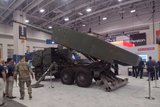
New counter-drone technologies, autonomous launchers and manufacturing modernisation initiatives highlighted emerging opportunities for defence suppliers, while the UK advanced a major military vehicle procurement programme.

Non-US companies are increasingly looking to establish subsidiary and partnerships to access the potential billions of dollars of vehicle and land systems contracts and there has already been some success.

Pearson Engineering has provided equipment and engineering expertise to the Armed Forces of Ukraine since the beginning of the full-scale Russian invasion in 2022. The British company is now working to deepen engagement with the Ukrainian defence industry, expanding its support for the country’s population and laying the foundations for future technological innovation.
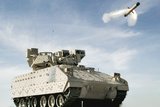
Rather than developing entirely new weapons, defence companies are looking to build on existing weapons and systems to deliver greater capability, control costs and accelerate fielding.

With a production rate of more than 10 million vehicles annually, the US commercial car and vehicle manufacturing base is second only to China. Defence companies are looking at how the vehicles, technology and manufacturing capability can support programmes.

Connect with us on socials


