


World Defense Show 2026: Northrop Grumman to present improved C2 management system
The Northrop Grumman Integrated Battle Command System is in service with Poland and the US Army with another 20 countries believed to have expressed an interest.


A Special Programs team from the US Air Force (USAF) has developed a delivery process for solutions that protect against cyber insider threats, as announced by the Air Force Materiel Command on 5 March.
Lt. Col. Richard Howard, chief, Materiel Solutions Analysis (MSA), Special Programs division, said: 'We have developed an agile and efficient process for delivering solutions that protect against the cyber insider threat.'
The MSA team aims to identify and test commercial and government off-the-shelf software and hardware and transition viable solutions into the classified arena. Combating cyber insider threat, however, has quickly become a primary focus for the team.
The team has now developed the Insider Threat Universe (ITU) model, which aims to overcome a trend emerging from industry to focus on a single solution to fix insider threats and attacks. Instead, ITU is a layered approach, with confidentiality, integrity and availability making up the basis of the ITU and information serving as the core.
The MSA team is now working to socialice the ITU concept and generate open communication among other Department of Defense (DoD) agencies also faced with growing insider threat problems.
Paul Krueger, chief engineer, MSA, said: 'The cyber insider threat is complicated, difficult to define and a challenge to defend against. The ITU model is a useful tool that can be used to help define these threats, but it is a constantly evolving concept.
'Communication is the only way synergy can be developed across the board. Making the community aware of currently used technologies, as well as equipment and software that's being tested and fielded by facilities like the MSA Lab, is critical to solving this problem.'
During the last year, the demand for MSA-vetted technologies has increased exponentially. In order to keep up with testing and analysis, MSA has stood up a testing lab, developed a threat model and organised a forum fostering dialogue among other DoD agencies.
The hope is that by fostering communication and innovation, the insider cyber threat problem can be successfully mitigated, and technological, physical and administrative solutions can be leveraged across the DoD IT enterprise.

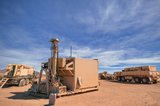
The Northrop Grumman Integrated Battle Command System is in service with Poland and the US Army with another 20 countries believed to have expressed an interest.
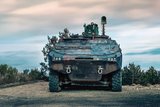
The Thales DigitalCrew package, first unveiled at last year’s Defence IQ International Armoured Vehicles conference, is designed to merge imaging and apply a layer of decision-making and observation algorithms to support crew and other personnel.
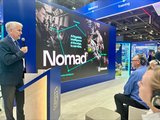
Nomad can provide militaries with real-time intelligence, saving critical time on the battlefield.
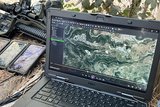
Taurus operates alongside the Israel Defense Forces’ Orion system which supports mission management across tens of thousands of manoeuvring forces, from squad leaders to battalion commanders.
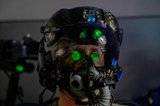
The plan for the new displays follows fresh investment in Kopin’s European facilities by Theon and an order for head-up displays in fielded aircraft, with funding from the US Department of Defense.
Persistent Systems received its largest ever single order for its MPU5 devices and other systems earlier this month and has already delivered the 50 units to the US Army’s 4th Infantry Division.

Connect with us on socials


