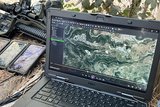
Babcock nears first customer for Nomad AI translation tool
Nomad can provide militaries with real-time intelligence, saving critical time on the battlefield.
Rostec company Kret has announced plans to target the export market with a variant of the airborne Rychag-AB active jammer.
The Rychag-AB active jammer is currently being delivered to the Russian Ministry of Defence as part of the electronic warfare suite on the Mi-8MTPR-1 helicopter. Eighteen of these helicopters are due for delivery to the Russian Army by the end of 2016.
The Rychag-AB variant to be offered for export will differ from the Russian version in a number of ways, but Kret has not specified how.
The jammer is designed to be installed on fixed-wing and rotor-wing helicopters and ground facilities. The system is understood to be capable of disrupting operation of air- and surface-based anti-aircraft missiles at ranges of up to 100km, providing protection for airplanes, helicopters and drones against air defence aviation; as well as ground vehicles against air strikes.
The system can suppress several targets at once. The device can define the type of target and select the most effective jamming method from its integrated database.
Nomad can provide militaries with real-time intelligence, saving critical time on the battlefield.
Taurus operates alongside the Israel Defense Forces’ Orion system which supports mission management across tens of thousands of manoeuvring forces, from squad leaders to battalion commanders.
The plan for the new displays follows fresh investment in Kopin’s European facilities by Theon and an order for head-up displays in fielded aircraft, with funding from the US Department of Defense.
Persistent Systems received its largest ever single order for its MPU5 devices and other systems earlier this month and has already delivered the 50 units to the US Army’s 4th Infantry Division.
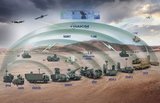
Turkey has joined the family of countries attempting to establish a multilayered air defence system with government approval in August 2024 for the effort landed by Aselsan. Dubbed Steel Dome, the programme joins Israel’s Iron Dome, the US Golden Dome, India’s Mission Sudarshan Chakra and South Korea’s low-altitude missile defence system.
MARSS’ NiDAR system has been deployed using sensors from static platforms to provide detection and protection for static sights, such as critical infrastructure, ports and military bases.