Sales surge for BAE Systems in FY2019


BAE Systems confirmed that the company saw a 7% increase in sales throughout FY2019. This represents an increase of £1.7 billion ($2.18bn).
At the same time, operating profit increased to £1.89 billion with basic earnings per share also jumping 48% to 46.4p.
Charles Woodburn, CEO of BAE Systems said: ‘2019 has been a year of significant progress for BAE Systems. We delivered a good set of financial results in line with guidance, growing sales and earnings, with improved operational performance and increased investment in the business to underpin our growth outlook’.
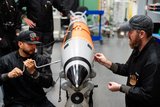
A number of key contracts were awarded or renewed throughout the year including a £230m seven-year Torpedo repair and maintenance contract, increased demand for the Advanced Precision Kill Weapon System (APKWS)and a £352 million contract to upgrade various M88 vehicles.
In a statement released by the company on 20 February, the group reported that: ‘For the year ending 31 December 2020, the Group’s underlying earnings per share is expected to grow by mid-single digit percentage compared to the full-year underlying earnings per share in 2019 of 45.8p, assuming a $1.30 to sterling exchange rate.’
Related Equipment in Defence Insight




More from Defence Notes
-
![Orchestrating operational readiness across every defence domain]()
Orchestrating operational readiness across every defence domain
Are all systems ready for the next mission? Have upgrades been applied? Are all assets aligned to deploy together, on time and fully prepared? In modern defence operations, readiness is no longer measured platform by platform. It is measured by how well people, assets, data and decisions move together — across land, sea and air.
-
![How deepening AI usage can boost efficiency and maximise effects for forces]()
How deepening AI usage can boost efficiency and maximise effects for forces
Saab has outlined how it is using artificial intelligence to make training more like electronic gaming, while the UK’s Power Size Technologies is applying the same technology to better evaluate and design vehicle capability, moving AI-enabled innovation further upstream from the frontline.
-
![From systems integrator to multi-domain solutions provider (video)]()
From systems integrator to multi-domain solutions provider (video)
Philipp von Brandenstein, Head of Corporate Communications at Rheinmetall, explains how Eurosatory 2026 marked a new stage in the company's evolution.
-
![US Pentagon pushes for major reform of defence acquisition system]()
US Pentagon pushes for major reform of defence acquisition system
The US Department of Defense has requested new contracting authorities from Congress, using the Army's MV-75 Cheyenne programme to demonstrate how competition, digital engineering and closer industry collaboration could accelerate acquisitions.
-
![US speeds up B61-13 nuclear bomb production as programme moves further ahead of schedule]()
US speeds up B61-13 nuclear bomb production as programme moves further ahead of schedule
The US government plans to accelerate production even further after achieving key B61-13 milestones months ahead of schedule, as the programme advances amid growing US-China strategic competition.