Russia flexes surge capability muscles (Analysis)
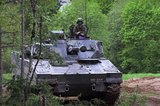
VDV troops on 'peacekeeping' duty in Kazakhstan, January 2022. (Photo: Russian MoD)
The recent ten-day deployment of ‘peacekeeping’ troops to Kazakhstan reflects recent and ongoing efforts to enhance Russian airborne capabilities — should Ukraine be worried?


The Airborne Forces (VDV) branch of the Russian Armed Forces demonstrated its rapid deployment capabilities in early January, following a request from the government of Kazakhstan for assistance from the Collective Security Treaty Organization (CSTO) group of ex-Soviet republics.
This was all the more impressive given the simultaneous commitment of 100,000 Russian troops to threaten the Ukrainian frontier and the celebration of the Orthodox Christmas on 7 January.
Kazakh President Kassym-Jomart Tokayev appealed for CSTO support on 6 January, four days after anti-government protests erupted in the capital Almaty and other cities.
The first Russian units arrived by the
Already have an account? Log in
Want to keep reading this article?




More from Defence Notes
-
![Estonia boosting defence industry with lessons from Ukraine, says country’s economic minister]()
Estonia boosting defence industry with lessons from Ukraine, says country’s economic minister
Estonia is looking to boost its local defence industry with directed funding, industry parks, support through international orders for equipment and rapid prototyping.
-
![UK faces cost of balancing defensive capabilities abroad as Iran conflict widens]()
UK faces cost of balancing defensive capabilities abroad as Iran conflict widens
The UK has recently deployed a Type 45 destroyer to Cyprus and has bolstered its presence in the Middle East in recent weeks with supporting air power to protect neighbouring countries’ air defences.
-
![White House calls on Pentagon contractors to “rapidly and aggressively” boost weapon production]()
White House calls on Pentagon contractors to “rapidly and aggressively” boost weapon production
Intended to sustain Operation Epic Fury against Iran, efforts to increase the production of weapons and ammunition could expose long-standing weaknesses in the US defence industrial base.
-
![India’s strategic defence footprint expansion could be accelerated by Iran-Israel conflict]()
India’s strategic defence footprint expansion could be accelerated by Iran-Israel conflict
The latest escalation between Iran and Israel could shape New Delhi’s next-generation shield as India deepens cooperation with Israel on missile defence and drone production.
-
![Is the US magazine of air defence interceptors deep enough to sustain a long campaign against Iran?]()
Is the US magazine of air defence interceptors deep enough to sustain a long campaign against Iran?
The Pentagon spent a considerable number of THAAD and SM-3 rounds to defend against Iranian missiles in 2025 and has not fully replenished its reserves.
-
![New Zealand buys tri-service uncrewed kit from Syos Aerospace]()
New Zealand buys tri-service uncrewed kit from Syos Aerospace
As uncrewed technology continues to play an increasingly central role in modern military activities, New Zealand’s recent acquisitions point towards its the force’s focus on cost-effective capability.