US National Security Strategy prioritises advanced military capabilities and national industry
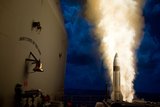
An unarmed Minuteman III was tested at Vandenberg Air Force Base to demonstrate the system’s health and accuracy. (Photo: US Air Force)
The 2025 NSS has emphasised investment in the US nuclear and air defence inventory and national industry, but it leaves multiple unanswered questions on how the White House will implement this approach.


The recently launched 2025 US National Security Strategy (NSS) has asserted the country’s focus on improving the Pentagon’s arsenal while enhancing the defence industry’s capacity to produce and innovate. In the document, President Donald Trump claimed the US will “develop every dimension” of its national strength.
For Emily Harding, deputy director and senior fellow with the CSIS International Security Programme, “US businesses should be deeply encouraged by the explicit call for closer collaboration between the US government and the American private sector”.
Meanwhile, Tess deBlanc-Knowles, senior director of the Atlantic Council Technology Programmes and former senior policy adviser at
Already have an account? Log in
Want to keep reading this article?

More from Defence Notes
-
![India’s strategic defence footprint expansion could be accelerated by Iran-Israel conflict]()
India’s strategic defence footprint expansion could be accelerated by Iran-Israel conflict
The latest escalation between Iran and Israel could shape New Delhi’s next-generation shield as India deepens cooperation with Israel on missile defence and drone production.
-
![Is the US magazine of air defence interceptors deep enough to sustain a long campaign against Iran?]()
Is the US magazine of air defence interceptors deep enough to sustain a long campaign against Iran?
The Pentagon spent a considerable number of THAAD and SM-3 rounds to defend against Iranian missiles in 2025 and has not fully replenished its reserves.
-
![New Zealand buys tri-service uncrewed kit from Syos Aerospace]()
New Zealand buys tri-service uncrewed kit from Syos Aerospace
As uncrewed technology continues to play an increasingly central role in modern military activities, New Zealand’s recent acquisitions point towards its the force’s focus on cost-effective capability.
-
![Golden Dome for America hits one-year mark but key questions remain on its progress]()
Golden Dome for America hits one-year mark but key questions remain on its progress
Integration issues, bureaucracy and undefined policies and authorities could hamper the full implementation of the “shield” to defend the US territory against aerial threats.
-
![US Air Force pushes Sentinel’s initial capability to early 2030s despite China’s nuclear progress]()
US Air Force pushes Sentinel’s initial capability to early 2030s despite China’s nuclear progress
While the US struggles to modernise the 50-year-old land leg of its nuclear triad, China has been rapidly developing and fielding new nuclear capabilities.