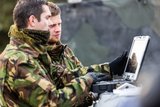
Japan offers to boost Sri Lanka security as China makes inroads
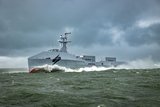
Japan has pledged to help strengthen Sri Lanka’s maritime security, authorities said on 21 August, in a new sign of efforts to counter China’s strategic grip on the Indian Ocean island.
Sri Lankan President Maithripala Sirisena thanked Japan’s Defence Minister Itsunori Onodera for donating two coast guard patrol craft costing over $11 million in total, his office said in a statement after talks in Colombo.
The statement said: ‘Attention has been drawn to further strengthening maritime security cooperation between Japan and Sri Lanka.’
The visit came a week after the US State Department gave $39 million to strengthen the island’s naval capabilities.
Sirisena said he was happy that Onodera, the first Japanese defence minister to visit, was travelling to two strategic ports on the island.
Onodera will visit Hambantota, which Colombo in December 2017 leased to a Chinese state-owned company for 99 years.
The government said it was forced to lease the port for $1.1 billion because it could not service loans from Beijing to build the white-elephant facility agreed by former President Mahinda Rajapakse.
Hambantota, 230kms from Colombo, straddles the world’s busiest east-west shipping route and gives China a foothold in a region long dominated by India.
The Japanese minister will also visit Trincomalee, a natural harbour that was the target of Japanese bombing during World War II.
China has edged out Japan as a key funder of ports and other projects in the island in recent years. Sri Lanka has become a key link in its ambitious ‘Belt and Road’ international infrastructure initiative. China has also vowed to keep providing financial help to Sri Lanka.
The International Monetary Fund, which bailed out Sri Lanka in 2016 with a $1.5 billion loan, has warned Colombo over its debt.



More from Defence Notes
-
![“Capital follows confidence” as defence courts private money]()
“Capital follows confidence” as defence courts private money
Outside investment and the direction in which venture money flows may reveal what defence will buy years before formal programmes begin.
-
![Canada’s new military drone marketplace targets rapid acquisition pipeline]()
Canada’s new military drone marketplace targets rapid acquisition pipeline
The Department of National Defence expects initial contracts to deliver thousands of uncrewed systems, but has yet to establish the quantities, capability mix or deadline behind Ottawa’s promised tenfold expansion.
-
![Ukraine turns legacy Kongsberg land turrets into semi-autonomous USV weapons]()
Ukraine turns legacy Kongsberg land turrets into semi-autonomous USV weapons
The company told Shephard that Ukraine is operating modified Protector weapon stations originally supplied for armoured vehicles, with human operators authorising engagements from hundreds of kilometres away.
-
![UK urged to prioritise sea, air and space over heavy armour]()
UK urged to prioritise sea, air and space over heavy armour
A report from the Council on Geostrategy argues the UK should move away from a traditional balanced force and shift investment to naval, air and space capabilities, backed by a larger fleet of attack submarines and deeper AUKUS integration.
-
![Thales: deployment speed to determine winners in ‘production versus production’ era]()
Thales: deployment speed to determine winners in ‘production versus production’ era
At its technology summit in London, attended by Shephard, Thales UK examined the importance of speed to delivery, the growing focus on cross-domain capabilities and how procurement reform could be crucial for future battlefield advantage.
-
![Orchestrating operational readiness across every defence domain]()
Orchestrating operational readiness across every defence domain
Are all systems ready for the next mission? Have upgrades been applied? Are all assets aligned to deploy together, on time and fully prepared? In modern defence operations, readiness is no longer measured platform by platform. It is measured by how well people, assets, data and decisions move together — across land, sea and air.