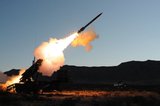
Japan invests in hypersonic and stand-off missiles


Japan’s Self-Defense Force (SDF) is developing and buying new classes of missile aimed to counter the threats it perceives in its neighbourhood, including a belligerent North Korea’s ballistic missile programme and claims on Japanese islands by an assertive China.
Tokyo’s intentions were made clear in the recently published overview of the defence budget for FY2020. It stated: ‘The SDF will acquire stand-off firepower and other requisite capabilities to deal with ships and landing forces attempting to invade Japan, including remote islands, from the outside of their threat envelopes.’
It added: ‘In addition, in order to appropriately leverage advances in military
Our news & analysis is now part of Defence Insight®
A Basic-level or higher Defence Insight subscription is now required to view this content.




More from Defence Notes
-
![The speed of relevance: how companies can navigate the new era of European defence procurement]()
The speed of relevance: how companies can navigate the new era of European defence procurement
European militaries face a rapidly evolving security landscape and defence production must accelerate to meet surging demand for platforms and equipment. Industry needs to adapt to ensure it gets its products into the hands of the end user, Evelyn Rafferty, Senior Director Aerospace and Defence - Europe at Plexus told Shephard’s Gerrard Cowan.
-
![Eurosatory 2026: Milrem Robotics puts forward multi-layered defence concept for NATO's eastern flank]()
Eurosatory 2026: Milrem Robotics puts forward multi-layered defence concept for NATO's eastern flank
Autonomous systems developer Milrem has evolved a model for an interoperable robotised approach to the Eastern Flank Deterrence Initiative (EFDI), showing how uncrewed systems could provide a multi-layered defence architecture in the air and on land along NATO’s eastern borders.
-
![Eurosatory 2026 to highlight changing defence and security priorities]()
Eurosatory 2026 to highlight changing defence and security priorities
Eurosatory 2026 will reflect a defence and security sector shaped by conflict, rising government spending, uncrewed systems, multidomain networks and growing demand for sovereign capabilities.
-
![Delays, departures and drama cloud UK defence programmes ahead of absent DIP]()
Delays, departures and drama cloud UK defence programmes ahead of absent DIP
The UK defence secretary’s departure suggests that the long-delayed Defence Investment Plan is unlikely to meet the funding demands of the armed forces, with consequences for procurement and the UK’s standing at a NATO summit weeks away.
-
![Agile, sovereign, edge-ready: rewiring defence IT for a contested decade]()
Agile, sovereign, edge-ready: rewiring defence IT for a contested decade
Today's rapidly changing security landscape means that armed forces can no longer treat their data in the same way as in the past. What are the key challenges they face, and how can industry help them?
-
![US lawmakers prepare a historic investment in stockpile replenishment in FY2027]()
US lawmakers prepare a historic investment in stockpile replenishment in FY2027
The House Armed Services Committee recently released the Chairman’s NDAA FY2027 markup, which supports the Pentagon’s request for nearly $90 billion for long-range missiles, air defence interceptors, precision-guided munitions and industrial baseline items.