HMAS Melbourne fires Sea Sparrow


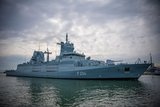
HMAS Melbourne has launched an Evolved Sea Sparrow Missile in a test off the east coast of Australia, the Royal Australian Navy announced on 8 November.
The testing saw the vessel’s combat management system track and engage a UAS target drone, proving the weapon’s ability to protect the vessel in a hostile environment.
Melbourne’s Air Warfare Officer, Lieutenant Rhys Ryan, said the activity went smoothly.
‘The firing took months of preparation to understand the combat system, and how its various components integrated with each other.
‘Our mission is to fight and win at sea, and the test was not only important in proving our combat system works but to give confidence to our ship’s company in our war fighting ability.’
The ESSM is designed for anti-ship missile defence. The semi-active, medium-range homing missile can conduct mid-course flight corrections through radar and data uplinks. It can engage surface-to-surface and surface-to-air targets and is used by Australian frigates.
The test was conducted as part of Melbourne’s three week sea qualification trials following a period of dry docking and maintenance.


More from Defence Notes
-
![Thales: deployment speed to determine winners in ‘production versus production’ era]()
Thales: deployment speed to determine winners in ‘production versus production’ era
At its technology summit in London, attended by Shephard, Thales UK examined the importance of speed to delivery, the growing focus on cross-domain capabilities and how procurement reform could be crucial for future battlefield advantage.
-
![Orchestrating operational readiness across every defence domain]()
Orchestrating operational readiness across every defence domain
Are all systems ready for the next mission? Have upgrades been applied? Are all assets aligned to deploy together, on time and fully prepared? In modern defence operations, readiness is no longer measured platform by platform. It is measured by how well people, assets, data and decisions move together — across land, sea and air.
-
![Global tensions drive defence supply chain scrutiny]()
Global tensions drive defence supply chain scrutiny
Governments worldwide are scrambling to decouple defence supply chains from dependency upon strategic rivals, but countries could struggle to do it all themselves.
-
![How deepening AI usage can boost efficiency and maximise effects for forces]()
How deepening AI usage can boost efficiency and maximise effects for forces
Saab has outlined how it is using artificial intelligence to make training more like electronic gaming, while the UK’s Power Size Technologies is applying the same technology to better evaluate and design vehicle capability, moving AI-enabled innovation further upstream from the frontline.
-
![From systems integrator to multi-domain solutions provider (video)]()
From systems integrator to multi-domain solutions provider (video)
Philipp von Brandenstein, Head of Corporate Communications at Rheinmetall, explains how Eurosatory 2026 marked a new stage in the company's evolution.
-
![US Pentagon pushes for major reform of defence acquisition system]()
US Pentagon pushes for major reform of defence acquisition system
The US Department of Defense has requested new contracting authorities from Congress, using the Army's MV-75 Cheyenne programme to demonstrate how competition, digital engineering and closer industry collaboration could accelerate acquisitions.