Estonia opts for smart, adaptable and cooperative solutions in the face of Russian threat
An Estonian HIMARS crew undertakes its first independent live fire in July 2025; the system is seen as a key capability for the small country. (Photo: US Army)
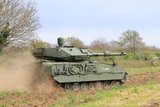
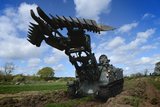
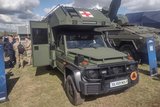
Estonian-made equipment is being put through the toughest of evaluations in the hands of Ukrainian soldiers resisting the full-scale Russian invasion which began in 2022. The country has long seen the threat and is continuing to adapt for the future.


Estonia, by nature of its history of having been a Soviet state bordering Russia and with a minority Russian-ethnic population, has been more prepared for possible Russian aggression than most other EU and NATO countries.
Its defence challenges are particular in that it has the third smallest population and the third smallest GDP in the EU. These characteristics of the country have helped form its defence policies and the development of its industrial base and narrowed its procurement plans while also leading it to look to form international joint ventures and defence alliances.
The size of its military reflects its small population of 1.3
Our news & analysis is now part of Defence Insight®
A Basic-level or higher Defence Insight subscription is now required to view this content.

More from Defence Notes
-
![UK urged to prioritise sea, air and space over heavy armour]()
UK urged to prioritise sea, air and space over heavy armour
A report from the Council on Geostrategy argues the UK should move away from a traditional balanced force and shift investment to naval, air and space capabilities, backed by a larger fleet of attack submarines and deeper AUKUS integration.
-
![Thales: deployment speed to determine winners in ‘production versus production’ era]()
Thales: deployment speed to determine winners in ‘production versus production’ era
At its technology summit in London, attended by Shephard, Thales UK examined the importance of speed to delivery, the growing focus on cross-domain capabilities and how procurement reform could be crucial for future battlefield advantage.
-
![Orchestrating operational readiness across every defence domain]()
Orchestrating operational readiness across every defence domain
Are all systems ready for the next mission? Have upgrades been applied? Are all assets aligned to deploy together, on time and fully prepared? In modern defence operations, readiness is no longer measured platform by platform. It is measured by how well people, assets, data and decisions move together — across land, sea and air.
-
![Global tensions drive defence supply chain scrutiny]()
Global tensions drive defence supply chain scrutiny
Governments worldwide are scrambling to decouple defence supply chains from dependency upon strategic rivals, but countries could struggle to do it all themselves.
-
![How deepening AI usage can boost efficiency and maximise effects for forces]()
How deepening AI usage can boost efficiency and maximise effects for forces
Saab has outlined how it is using artificial intelligence to make training more like electronic gaming, while the UK’s Power Size Technologies is applying the same technology to better evaluate and design vehicle capability, moving AI-enabled innovation further upstream from the frontline.
-
![From systems integrator to multi-domain solutions provider (video)]()
From systems integrator to multi-domain solutions provider (video)
Philipp von Brandenstein, Head of Corporate Communications at Rheinmetall, explains how Eurosatory 2026 marked a new stage in the company's evolution.