BAE Systems remains on track
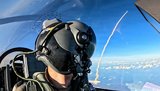
The first landings by 6 Squadron Eurofighter Typhoon at RAF Leuchars. (Photo: BAE Systems)
While uncertainties surrounding COVID-19 remain, prospects are high for sales growth, margin expansion and three-year cash targets.


BAE Systems has reported that 2021 guidance remains unchanged from the position outlined in the interim results and is evidenced by continuing good operational performance.
Despite setbacks caused by the covid pandemic, there has been reported growth as sales are expected to be up 3-5%, from the 2020 levels of £20,862 million, by the end of year.
The company has received a number of major awards in the first three quarters of 2021 which have enabled this growth.
Two major contracts were received for Eurofighter Typhoon Future Synthetic Training, valued around £220 million, and Typhoon capability enhancements, valued around £135 million.
An early design and concept contact was received for the UK future submarine programme, valued at £85 million, which aims to replace the Astute class.
The largest award reported was a ten-year IDIQ for sustain and technical support of the Limited Interim Missile Warning System programme, with a maximum potential value of $872 million.
The 2021 free cash flow is less than £1 billion and the cumulative free cash flow for the 2021-2023 period is less than £4 billion.




More from Defence Notes
-
![US speeds up B61-13 nuclear bomb production as programme moves further ahead of schedule]()
US speeds up B61-13 nuclear bomb production as programme moves further ahead of schedule
The US government plans to accelerate production even further after achieving key B61-13 milestones months ahead of schedule, as the programme advances amid growing US-China strategic competition.
-
![Canada’s C$2 billion ACSV deal reinforces new defence industrial strategy as allies align]()
Canada’s C$2 billion ACSV deal reinforces new defence industrial strategy as allies align
General Dynamics Land Systems-Canada is the country’s first strategic partner under the Defence Industrial Strategy’s Strategic Partnership Framework, an effort to provide companies with confidence to invest and boost the defence labour force.
-
![New UK armed forces minister frames High North defence as vital to “homeland security”]()
New UK armed forces minister frames High North defence as vital to “homeland security”
The UK’s Minister for the Armed Forces Louise Sandher-Jones made her first appearance in the role before the House of Commons Defence Committee this week to highlight efforts to improve capability in the High North.
-
![Canada seeks to strengthen industrial ties with the US on classified programmes]()
Canada seeks to strengthen industrial ties with the US on classified programmes
Ottawa explores expanding defence-industrial cooperation with Washington into sensitive programmes, an approach that could reshape NORAD modernisation, strengthen North American supply chains and create new opportunities for defence contractors.