Abu Dhabi hosts UAV and USV technology challenge
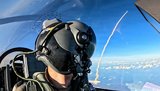
The MBZIRC Maritime Grand Challenge seeks to find solutions to autonomous technology problems. (Photo: ASPIRE)
The MBZIRC Maritime Grand Challenge 2023 will assess swarming drone technology in GNSS-denied environments.


Abu Dhabi-based technology research organisation ASPIRE announced the 2023 Mohamed Bin Zayed International Robotics Challenge (MBZIRC) Maritime Grand Challenge on 28 September to explore real-time solutions to maritime safety and security challenges.
The competition has a prize fund of more than $3 million.
The Grand Challenge is held every two years and aims to foster innovation and technical excellence in robotics, by taking technology out of the laboratory and into the field.
This time, the competition will involve a ‘heterogeneous collaboration among unmanned aerial vehicles [UAVs] and unmanned surface vehicles [USVs]’, ASPIRE noted, in order to identify a target vessel from several similar vessels in open waters in a GNSS-denied environment, and to offload specific items from the target onto a USV in the shortest possible time using autonomous technologies.
Dr Arthur Morrish, chief executive of ASPIRE, described this as a new kind of kind of exercise in autonomous robotics.

More from Defence Notes
-
![From systems integrator to multi-domain solutions provider (video)]()
From systems integrator to multi-domain solutions provider (video)
Philipp von Brandenstein, Head of Corporate Communications at Rheinmetall, explains how Eurosatory 2026 marked a new stage in the company's evolution.
-
![US Pentagon pushes for major reform of defence acquisition system]()
US Pentagon pushes for major reform of defence acquisition system
The US Department of Defense has requested new contracting authorities from Congress, using the Army's MV-75 Cheyenne programme to demonstrate how competition, digital engineering and closer industry collaboration could accelerate acquisitions.
-
![US speeds up B61-13 nuclear bomb production as programme moves further ahead of schedule]()
US speeds up B61-13 nuclear bomb production as programme moves further ahead of schedule
The US government plans to accelerate production even further after achieving key B61-13 milestones months ahead of schedule, as the programme advances amid growing US-China strategic competition.
-
![Canada’s C$2 billion ACSV deal reinforces new defence industrial strategy as allies align]()
Canada’s C$2 billion ACSV deal reinforces new defence industrial strategy as allies align
General Dynamics Land Systems-Canada is the country’s first strategic partner under the Defence Industrial Strategy’s Strategic Partnership Framework, an effort to provide companies with confidence to invest and boost the defence labour force.
-
![New UK armed forces minister frames High North defence as vital to “homeland security”]()
New UK armed forces minister frames High North defence as vital to “homeland security”
The UK’s Minister for the Armed Forces Louise Sandher-Jones made her first appearance in the role before the House of Commons Defence Committee this week to highlight efforts to improve capability in the High North.
-
![Canada seeks to strengthen industrial ties with the US on classified programmes]()
Canada seeks to strengthen industrial ties with the US on classified programmes
Ottawa explores expanding defence-industrial cooperation with Washington into sensitive programmes, an approach that could reshape NORAD modernisation, strengthen North American supply chains and create new opportunities for defence contractors.