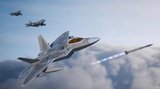
Will tomorrow’s US Air Force fleet be pilotless?
A KC-135 Stratotanker refuels an F-15. (Photo: USAF)
The US Air Force has been showing an increasing interest in adding trusted uncrewed capabilities to its aircraft inventory.


Lessons learned from recent conflicts have been pushing the US Air Force (USAF) towards increasing the use of autonomy across its aircraft fleet. The service is currently conducting several efforts to implement and deepen the operation of trusted uncrewed capabilities in its in-service platforms.
Aligned with the recent updates to USAF doctrine for operations, command and control (C2) and planning, these initiatives intend to enable and facilitate attack, logistics, support and SAR missions in contested and congested environments, while reducing risks for pilots and aircraft crews.
In its Reoptimizing for Great Power Competition paper, the USAF highlighted that “embracing change
Our news & analysis is now part of Defence Insight®
A Basic-level or higher Defence Insight subscription is now required to view this content.

More from Air Warfare
-
![US Coast Guard faces key procurement decisions after C-130J and MQ-9B orders]()
US Coast Guard faces key procurement decisions after C-130J and MQ-9B orders
The service is updating several parts of its aviation fleet including fixed-wing and rotary-wing aircraft and procuring uncrewed aircraft to boost its maritime surveillance.
-
![Sophistication versus simplification: the divided future of air-to-air missiles]()
Sophistication versus simplification: the divided future of air-to-air missiles
As global air combat operations continue to evolve at a rate not seen for decades, what will the next generation of air-to-air weapons look like, and what missions will they need to fulfil?
-
![AUSA 2026: New multiwarhead loitering munition enters increasingly competitive market]()
AUSA 2026: New multiwarhead loitering munition enters increasingly competitive market
Heaviside Industries has unveiled its new Tyr loitering munition at AUSA 2026 in Washington, DC, joining a growing field of manufacturers seeking to capitalise on billions of dollars in anticipated military spending.
-
![Middle Eastern demand opens fresh export prospects for Lockheed Martin’s F-35 fighter jet]()
Middle Eastern demand opens fresh export prospects for Lockheed Martin’s F-35 fighter jet
A proposed Saudi Arabian purchase of 48 stealth fighters could signal a broader regional opportunity for the F-35 as European programmes mature.
-
![US military plans multi-UAV trials with Northrop Grumman quantum-navigated Lumberjack]()
US military plans multi-UAV trials with Northrop Grumman quantum-navigated Lumberjack
An undisclosed US military branch is preparing to evaluate multiple Lumberjack Group 3 drones equipped with SandboxAQ’s AQNav magnetic-navigation system. Shephard spoke with Northrop Grumman and SandboxAQ to find out more.