US fires approximately 75 precision-guided weapons against Iran’s nuclear facilities
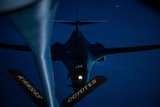
A B-2 Spirit stealth bomber approaches a KC-135 Stratotanker for an inflight refuelling. (Photo: US Air Force)
In the operation Midnight Hammer, the Pentagon deployed 14 GBU-57 Massive Ordnance Penetrators and more than two dozen Tomahawk missiles.


US forces fired approximately 75 precision-guided weapons against Iran’s nuclear facilities on 21 June in a massive surprise offensive. Named Midnight Hammer, the operation involved more than 125 US aircraft and multiple naval assets.
During the attack, the Pentagon conducted the first-ever operational use of the GBU-57 Massive Ordnance Penetrators (MOP). In total, 14 of those bunker bombs targeted the Fordow, Natanz and Isfahan facilities.
“Final battle damage will take some time, but initial battle damage assessments indicate that all three sites sustained extremely severe damage and destruction,” claimed Gen. Dan Caine, Chairman of the Joint Chiefs of Staff, on 22 June.
The
Already have an account? Log in
Want to keep reading this article?

More from Air Warfare
-
![US approves $16.5 billion in ‘emergency’ sales for air defence equipment for Middle East allies]()
US approves $16.5 billion in ‘emergency’ sales for air defence equipment for Middle East allies
The United Arab Emirates has taken the lion’s share of this round, with the US supporting its F-16 fleet and signing off on possible sales for more AMRAAM AIM-120 missiles and a counter-drone system.
-
![How uncrewed rotary platforms are shaping approaches to contested logistics]()
How uncrewed rotary platforms are shaping approaches to contested logistics
Defence industry primes are working on an array of different platforms to meet the growing need for rotary uncrewed aerial vehicles to carry out future logistics missions.
-
![US Air Force seeks capabilities to improve C3 for aircraft fleet and warfighters]()
US Air Force seeks capabilities to improve C3 for aircraft fleet and warfighters
The USAF published RFIs for enhancing its C3 capabilities after losing, in Operation Epic Fury, four aircraft in non-confrontational, unclear situations that could have been related to command, control and communication failures.