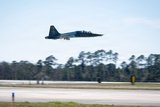
How the US Air Force is improving C2 and connectivity in contested logistics scenarios
USAF F-35A Lightning II aircraft perform an aerial mission during Mobility Guardian 23. (Photo: USAF)
Preparing multi-capable airmen to perform various tasks in multiple contexts is a main USAF goal to improve logistics efforts.


After conducting Exercise Mobility Guardian 23 (MG23) with 3,000 US and allied personnel, the USAF is now seeking ways to enhance its C2 and connectivity capacities for deployment in contested logistics scenarios.
The service is also increasing efforts to improve training for troops and prepare multi-capable airmen to perform various tasks in multiple contexts and provide logistical support to different models of aircraft.
‘Wars are won or lost based on logistics. Just look at the Russia and Ukraine conflict going on right now. The struggles that Russia has had, it has been because of logistics’, Maj Gen John
Our news & analysis is now part of Defence Insight®
A Basic-level or higher Defence Insight subscription is now required to view this content.

More from Air Warfare
-
![July drone digest: Sovereign production takes centre stage at Farnborough]()
July drone digest: Sovereign production takes centre stage at Farnborough
Farnborough International Airshow (FIA) 2026 revealed the growing scale of the UK’s uncrewed ambitions, with companies showcasing new CCA, autonomous wingmen and surveillance drones, while sovereign production emerged as a key factor for multiple programmes.
-
![July air forces review: Farnborough steals the headlines as programmes develop]()
July air forces review: Farnborough steals the headlines as programmes develop
The biannual Farnborough International Airshow 2026 was the backdrop in July for scores of deals, partnerships and announcements, including developments in the multinational next-generation Global Combat Air Programme and the UK’s $486 million trainer aircraft requirement.
-
![Maximise survivability with advanced electronic warfare (video)]()
Maximise survivability with advanced electronic warfare (video)
BAE Systems’ all-digital EW delivers 360-degree threat awareness in contested environments, boosts survivability, and cuts lifecycle costs.
-
![US Air Force seeks avionics upgrades for ageing T-38 Talon as T-7A Red Hawk delays persist]()
US Air Force seeks avionics upgrades for ageing T-38 Talon as T-7A Red Hawk delays persist
The USAF is looking for commercial avionics solutions to improve the T-38 Talon’s reliability, readiness and flight safety as continued T-7A Red Hawk delays increase the likelihood that the legacy trainer will remain in service longer than planned.