US Air Force F-35s exploit crowd-sourced approach for operational flight data
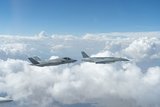
An F-35 jet is fitted with a QRIP package at Hill AFB. (Photo: USAF)
The Quick Reaction Instrumentation Package installed on frontline USAF F-35 fighter jets enables levels of data-gathering normally only found on dedicated test aircraft.


The USAF’s 59th Test and Evaluation Squadron (TES) has partnered with the service’s Test Resource Management Center to develop the Quick Reaction Instrumentation Package (QRIP).
In March, an initial set of operational F-35 aircraft were equipped with QRIP, enabling the first combat air forces contribution to crowd-sourced flight data (CSFD).
Instrumentation packages like QRIP have traditionally been reserved for use on test aircraft, and have previously been too large and expensive for operational aircraft integration.
Related Articles
NAVAIR awards Block 4-related F-35 contracts
Claims of Iranian radar’s F-35 detection capability remain unsubstantiated
The compact QRIP hardware has capacity to record almost a terabyte of data per flight, increasing the amount of CSFD available to developers with rapid access.
Nineteen F-35 jets have been modified with QRIP to date, with several taking part in exercises outside of the continental US. The CSFD gathered so far has accelerated reprogramming changes, highlighted software deficiencies, enabled rapid debriefs, and provided new data products to pilots and intelligence officers.
While the technology is currently only implemented within the F-35 fleet, the intent is to expand to all fielded air force fighter variants, as well as other platforms.
‘The more data we can collect from the air force’s diverse portfolio puts the crowd in CSFD and amplifies data sets we can use to gain competitive advantage against our adversaries and competitors,’ Lt Col Nathan Malafa, 59th TES commander, said.
Related Programmes in Defence Insight
Related Equipment in Defence Insight


More from Air Warfare
-
![Quantum Systems details 480km/h Ukrainian interceptor as production scales up]()
Quantum Systems details 480km/h Ukrainian interceptor as production scales up
Quantum Systems’s Ukraine-made interceptor SPYS is thought to cost approximately 10 times less than Russia's jet-powered uncrewed aerial systems and is being produced at scale.
-
![UK eyes lightweight satellite communications for UAVs]()
UK eyes lightweight satellite communications for UAVs
The UK is seeking to extend the operational reach of uncrewed aerial vehicles, reflecting growing demand for compact, energy-efficient technology to support beyond-line-of-sight operations.
-
![The new generation of defence companies emerging from the US UAV boom]()
The new generation of defence companies emerging from the US UAV boom
As the Pentagon accelerates procurement of low-cost, lethal UAVs through its Drone Dominance Program, emerging suppliers will need to demonstrate manufacturing capacity, supply chain resilience and reliability.