UK, Italy and Japan tie the knot with joint fighter project
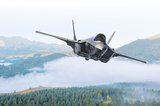
A rendering of the Global Combat Air System future fighter jet flying over Japanese skies. (Image: BAE Systems)
Japanese involvement is key to the feasibility of the Future Combat Air System, bringing money and industrial might to the table.


The UK, Japan and Italy have announced a new partnership under the Global Combat Air Programme (GCAP) to develop a trilateral next-generation fighter jet.
The announcement follows joint-concept studies by Rome, London and Tokyo launched during this year’s Farnborough Air Show in July.
The deal sees work on the UK-led Tempest Future Combat Air System (FCAS), and Japan’s F-X future fighter programme come together.
The GCAP project will have no lead nation or company overall. The programme will be of equal partnership with BAE Systems heading development on behalf of the UK, Leonardo for Italy and Mitsubishi Heavy Industries for Japan.
Our news & analysis is now part of Defence Insight®
A Basic-level or higher Defence Insight subscription is now required to view this content.




More from Air Warfare
-
![New US Army UH-60M Black Hawk order bridges uncertain path to MV-75 transition]()
New US Army UH-60M Black Hawk order bridges uncertain path to MV-75 transition
The US$234 million award for 16 Sikorsky UH-60Ms preserves near-term production, but funding uncertainty and an undefinitised contract leave the US Army’s long-term Black Hawk requirements unresolved.
-
![V-22 Osprey safety upgrade moves towards wider fleet installation under $35.5 million deal]()
V-22 Osprey safety upgrade moves towards wider fleet installation under $35.5 million deal
Bell Boeing will supply 73 additional ODSSHI kits as NAVAIR prepares to introduce predictive drive-system monitoring across US and Japanese V-22 fleets.
-
![AFA 2026: US Air Force examines uncrewed cargo aircraft for contested logistics]()
AFA 2026: US Air Force examines uncrewed cargo aircraft for contested logistics
The US Air Force is evaluating demonstrators for uncrewed cargo missions as it considers logistics requirements across the Pacific and other contested environments.
-
![Germany air focus: Europe’s leading near-term air market targets domestic industry]()
Germany air focus: Europe’s leading near-term air market targets domestic industry
Between 2026 and 2032, almost a quarter of EU aircraft spending is expected to come from Germany. While crewed programmes seek modernisation and replacement, uncrewed opportunities look to introduce entirely new capabilities, with both highlighting sovereignty and domestic production.
-
![Europe risks losing control of CUAS production capacity as manufacturers look abroad]()
Europe risks losing control of CUAS production capacity as manufacturers look abroad
European counter-drone developers are securing early orders in the Middle East while slow domestic acquisition processes threaten to redirect production capacity, expertise and investment away from Europe.