Royal Navy AW159 Wildcat completes missile tests at sea
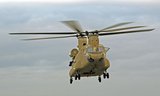
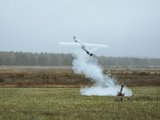
This the first time the Martlet LMM has been launched on frontline operations by the RN. (Photo: UK MoD/Crown Copyright)
During the one-month-long campaign, the RN AW159 Wildcat HMA helicopters operated with seven different weapon loads configurations and test-fired Martlet LMM missiles for the first time in frontline conditions.


During operations in the Pacific Ocean as part of Carrier Strike Group 21, the RN AW159 Wildcat HMA has completed a new round of trials with the Martlet and Sea Venom air-to-surface missiles.
In the month-long trial, ending in the middle of October, the AW159 was operated from RFA Argus from where it was flown for 19 days for a total of 87 flight hours.
During operations, the helicopter test-fired a Thales Martlet lightweight multirole missile (LMM) at an inflatable target.
The initial firing of the LMM from an RN AW159 took place in May 2020, but this was the first time
Our news & analysis is now part of Defence Insight®
A Basic-level or higher Defence Insight subscription is now required to view this content.





More from Air Warfare
-
![RAF Protector fleet grows as UK maritime surveillance role takes shape]()
RAF Protector fleet grows as UK maritime surveillance role takes shape
The RAF’s expanding Protector RG1 fleet could play a growing role in UK maritime surveillance following its first domestic operational sorties, with further aircraft deliveries scheduled through 2027.
-
![Oshkosh and Grid Aero tie-up tests new model for scaling military UAS production]()
Oshkosh and Grid Aero tie-up tests new model for scaling military UAS production
By combining established manufacturing capacity with startup aircraft design, the partnership could offer an alternative approach to scaling military uncrewed aircraft production.
-
![European funding and NATO interoperability could shape Polish helicopter plans]()
European funding and NATO interoperability could shape Polish helicopter plans
Poland is seeking to update its transport helicopters as part of a wider military aviation modernisation programme, with EU funding requirements and NATO interoperability key considerations.
-
![Poland air focus: $8.27 billion UAV market highlights value of long-term supplier relationships]()
Poland air focus: $8.27 billion UAV market highlights value of long-term supplier relationships
Poland’s growing investment in UAVs highlights how recurring procurement contracts and continuous technological development can provide suppliers with sustained opportunities beyond initial acquisitions.
-
![Saab’s flight-tested AI agents signal new era of crewed-uncrewed fighter systems]()
Saab’s flight-tested AI agents signal new era of crewed-uncrewed fighter systems
Saab is developing artificial intelligence (AI) agents for crewed and uncrewed aircraft, targeting potential operational deployment within months, while expanding its training capabilities, partnerships and ambitions for wider military applications.