Royal Air Force Typhoon fighter jets to receive new electric ground power units
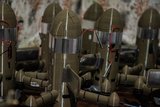
The new ground power units will support RAF Typhoon jets at Coningsby and Lossiemouth after a trial by BAE Systems. (Photo: BAE Systems)
New battery-powered ground power units will replace diesel systems at two RAF Typhoon bases, with the aim of reducing emissions and cutting costs.


RAF Typhoons will be powered by 40 new electric battery ground power units (GPUs) following a trial conducted by BAE Systems. The units will replace diesel powered systems and harmful emissions by more than 90% while cutting running costs by 80%.
The new GPUs will deliver sustainable ground power to Typhoon jets at RAF Lossiemouth and RAF Coningsby, with a 95% reduction in NOX fumes and 90% reduction in CO2 emissions.
The previous diesel units cost £20 ($24) per hour to run compared to the new units at £3 per hour for an eight-hour charge to power a Typhoon aircraft for a week. This is said to save more than £13 million across the fleet over a decade. The new units also require less maintenance and spares.
Related Articles
Airbus and Royal Air Force achieve sustainable aviation fuel milestone
Flt Lt Adam Hayler, DE&S Typhoon Development Team said: ‘In addition to its green credentials, [the GPU’s] maintenance costs are much reduced, meaning that overall operating costs are also lower. We estimate that it costs 15% of the current diesel solution; which is a clear benefit in light of current energy prices and maintenance costs.’
Related Equipment in Defence Insight



More from Air Warfare
-
![Attack drones versus CUAS – the future of warfare or just another trend?]()
Attack drones versus CUAS – the future of warfare or just another trend?
Demand signals for counter-drone technology are strong and the market is becoming crowded, but is this really the beginning of a new phase of warfare or will commentators be talking about something else 10 years from now?
-
![The 2020s: a decade of UAV spending growth]()
The 2020s: a decade of UAV spending growth
Total annual drone spending has increased nearly sixfold since the start of the decade, from $2.9 billion in 2020 to $16.3 billion in 2028, with Europe leading the rise.
-
![July drone digest: Sovereign production takes centre stage at Farnborough]()
July drone digest: Sovereign production takes centre stage at Farnborough
Farnborough International Airshow (FIA) 2026 revealed the growing scale of the UK’s uncrewed ambitions, with companies showcasing new CCA, autonomous wingmen and surveillance drones, while sovereign production emerged as a key factor for multiple programmes.