Rostec’s modernised rotorcraft takes maiden voyage
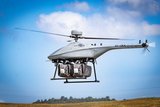
The Ka-226T has a new rotor head, blades and main gearbox. (Photo: Rostec State Corporation)
The modernised Ka-226T flew for the first time during flight tests at the Mil and Kamov National Helicopter Centre.


The most advanced Ka-226T light helicopter developed by Rostec’s subsidiary, Russian Helicopters Holding Company, has commenced flight tests and made its first flight.
The new Ka-266T is the first Russian rotorcraft with fully digital design documentation.
The modernised helicopter was displayed for the first time at MAKS-2021 and the international debut of the Ka-226T abroad will take place at Dubai Airshow 2021.
Due to the helicopter’s suitability for operation at altitudes of up to 6.5km, the Ka-226T was given the working title ‘The Climber’.
It differs from previous models with its new design of the airframe and fuselage with enhanced aerodynamic characteristics and the modern lightweight materials used for the hull.
Ka-226T has a coaxial main rotor design which provides good controllability in thin air, resistance to strong side winds, high rate of climb and take-off / land-on ability at high altitudes.
Serial production of the upgraded Ka-66T helicopter is scheduled to begin in 2022 at the Ulan-Ude Aviation Plant.
According to Shephard Defence Insight, the first serially produced Ka-226T, built for the Russian Emergencies Ministry, was demonstrated at the HeliRussia exhibition in 2013.
In mid-December 2014 during Russian President Vladimir Putin’s visit to India, an agreement was signed that is expected to lead to licensed production of the Ka-226T in the latter country.
Related Equipment in Defence Insight

More from Air Warfare
-
![E-3 Sentry encryption equipment no longer meets US security requirements, says USAF]()
E-3 Sentry encryption equipment no longer meets US security requirements, says USAF
The US Air Force says the Sentry fleet’s DAR-400 encryptor can no longer keep pace with changing security requirements and warns that a failure could affect US operations and data security.
-
![Spain air focus: Mature UAV market rewards early supplier engagement]()
Spain air focus: Mature UAV market rewards early supplier engagement
Spain accounts for 5% of European military UAV spending, broadly in line with its share of the continent’s wider defence market. What sets the country apart, however, is how much of that spending has already been committed, reflecting Spain's earlier adoption of the capability.
-
![AFA 2026: US Air Force examines uncrewed cargo aircraft for contested logistics]()
AFA 2026: US Air Force examines uncrewed cargo aircraft for contested logistics
The US Air Force is evaluating demonstrators for uncrewed cargo missions as it considers logistics requirements across the Pacific and other contested environments.