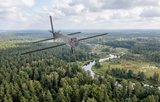
Malaysia activates ScanEagle squadron
Malaysia stands up a ScanEagle squadron in East Malaysia, followed a day later by the commissioning of a Keris-class vessel.


The Royal Malaysian Navy (RMN) activated its UAV-operating 601 Squadron on 4 March. Equipped with Insitu ScanEagles provided by the US under the Maritime Security Initiative, 601 Squadron is based at RMN Kota Kinabalu in East Malaysia.
The first batch of ScanEagles, comprising six UAVs, two launchers, two SkyHooks and three ground control stations, was delivered in May 2020.
However, the RMN only carried out its first UAV operations on 5 February as it wanted US support personnel on hand to provide technical assistance. However, COVID-19 travel restrictions in both countries resulted in American personnel only being able to
Our news & analysis is now part of Defence Insight®
A Basic-level or higher Defence Insight subscription is now required to view this content.



More from Air Warfare
-
![October crewed air review: Israel’s Apache deal bets on crewed aviation in an uncrewed age]()
October crewed air review: Israel’s Apache deal bets on crewed aviation in an uncrewed age
Israel’s $1 billion Apache helicopter order highlights the continued demand for crewed attack aviation, while growing integration with uncrewed systems could shape future modernisation and procurement decisions.
-
![US Navy keeps Super Hornet production restart option open, but without defined cost or timetable]()
US Navy keeps Super Hornet production restart option open, but without defined cost or timetable
The US Navy plans to preserve Super Hornet and Growler tooling as production winds down, with restart costs unassessed and final F/A-18 deliveries expected in late 2027.
-
![Connecting the layers: how networks can secure the future of European air defence]()
Connecting the layers: how networks can secure the future of European air defence
The rise of drones has reshaped the threat landscape for all European militaries. For industry, future defensive strategies must carefully balance a mix of passive and active measures to address the evolving danger, based around a highly integrated and responsive network of sensors and effectors.
-
![October drone digest: France and Lithuania advance loitering munition procurements as global spending surges]()
October drone digest: France and Lithuania advance loitering munition procurements as global spending surges
Recent procurement developments in France and Lithuania highlight the growing demand for loitering munitions, with global annual spending forecast to increase nearly 50-fold between 2020 and 2029.